Handbook
Preface
The crisis of contemporary biblical interpretation is not a lack of tools—it is a fragmentation of purpose. Modern hermeneutics has dissolved into competing streams: subjective reader-response theories that dethrone the text, historical-critical skepticism that treats Scripture as a collection of ancient Near Eastern folklore, and fragmented theological systems that set the Old Testament against the New, law against grace, and history against prophecy.
Nomomartyria—derived from the Greek nomos (commandment) and martyria (testimony/witness)—is not a novel invention. It is a recovery of the holistic, self-interpreting architecture of the biblical canon. Its premise is simple and absolute: the Author of Scripture has embedded within the text itself the precise mechanisms required for its own interpretation.
This framework stands upon two immutable pillars explicitly identified throughout salvation history and brought into final focus in the Apocalypse: the Commandments of God—the structural, moral, and cosmic law of the Creator—and the Testimony of Jesus Christ—the prophetic, redemptive, and historical witness of the Savior. Where these two pillars intersect, true biblical hermeneutics resides.
This handbook is designed to equip the student, pastor, theologian, and serious layperson with an unyielding, text-driven methodology that honors the total unity of the Word of God.
Handbook
Introduction
1. Purpose
The ultimate aim of this framework is to map the internal harmony of divine revelation without importing external philosophical or ecclesiastical biases. Interpreters frequently approach the biblical text with prefabricated theological lenses—rigid dispensationalism or closed covenantal systems—that force discordant texts into artificial categories. Nomomartyria allows the text to speak on its own terms, organizing interpretation around the two pillars that the Bible itself uses to define the covenant community at the close of human history (Rev. 12:17; 14:12).
By recognizing the permanent co-dependency of Law and Testimony, this system guards the interpreter against two enduring historical errors:
- Antinomianism: Dismissing the structural and moral law of God, which leads to disconnected, subjective mysticism.
- Legalism: Divorcing the law from its living center—the prophetic witness and substitutionary life of Jesus Christ.
2. Mission
The mission of this work is to establish a rigorous, objective, and reproducible method of biblical research. This framework treats the sixty-six books of the Protestant canon as a singular, non-contradictory organic whole. Its goal is to train students of the Word to trace internal verbal links, decode prophetic symbols using the Bible's own lexicon, and anchor every doctrinal claim in the total weight of scriptural evidence.
3. How to Use This Volume
This volume is structured as a progressive academic textbook and reference manual. Readers should proceed sequentially; the definitions, hierarchies of evidence, and interpretive rules established in early chapters govern every later discussion.
- Part I (Foundational Documents) establishes the constitutional framework, theological manifesto, and formal statement of faith undergirding the system.
- Parts II–IV outline the epistemology, first principles, and practical hermeneutical axioms required for exegesis.
- Parts V–VII supply research standards, a comprehensive symbolic lexicon, and the philosophical distinctives of the system compared to historical alternatives.
The definitions, hierarchies of evidence, and interpretive rules established here must be applied uniformly across all biblical genres—narrative, poetic, legal, and apocalyptic.
PART I
Foundational Documents
The Constitution, Manifesto, Statement of Faith,
and Remnant Standard of Nomomartyria
Chapter
Chapter 1: The Founding Manifesto
The Hermeneutical Crisis of the Late Modern Era
The contemporary church finds itself adrift in an epistemological vacuum. The historical-grammatical method, while valuable for establishing local linguistic facts, has been co-opted by a naturalistic historicism that treats Scripture as a collection of isolated fragments of ancient Near Eastern culture. Concurrently, postmodern reader-response models have dethroned the text, exalting the subjective experience of the interpreter as the ultimate arbiter of meaning.
The result is a fragmented church incapable of declaring a unified "Thus saith the Lord." Doctrines are weaponized against one another; the Old Testament is severed from the New; the character of God is depicted as undergoing an ontological mutation between Malachi and Matthew.
The Proclamation
Nomomartyria issues a formal protest against this fragmentation. We declare that the Bible is a macro-text—a divinely engineered, interconnected document characterized by absolute internal consistency. Our interpretive standard is not a human innovation; it is the ancient canonical boundary articulated by the prophet Isaiah:
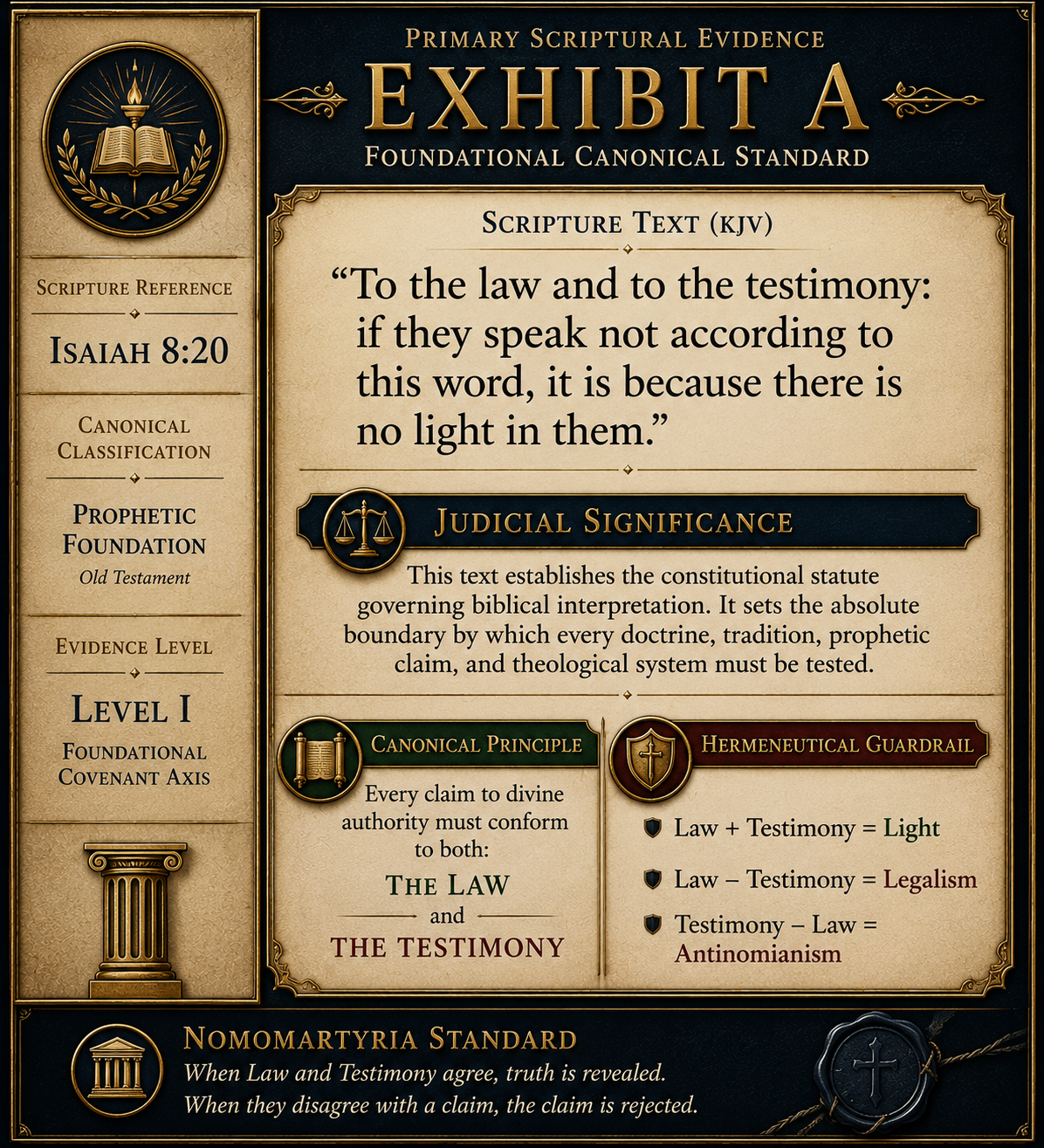
This declaration serves as the framework's absolute boundary marker. Any hermeneutical method, theological conclusion, or historical reconstruction that sets the Law against the Testimony is functionally blind to the architecture of revelation.
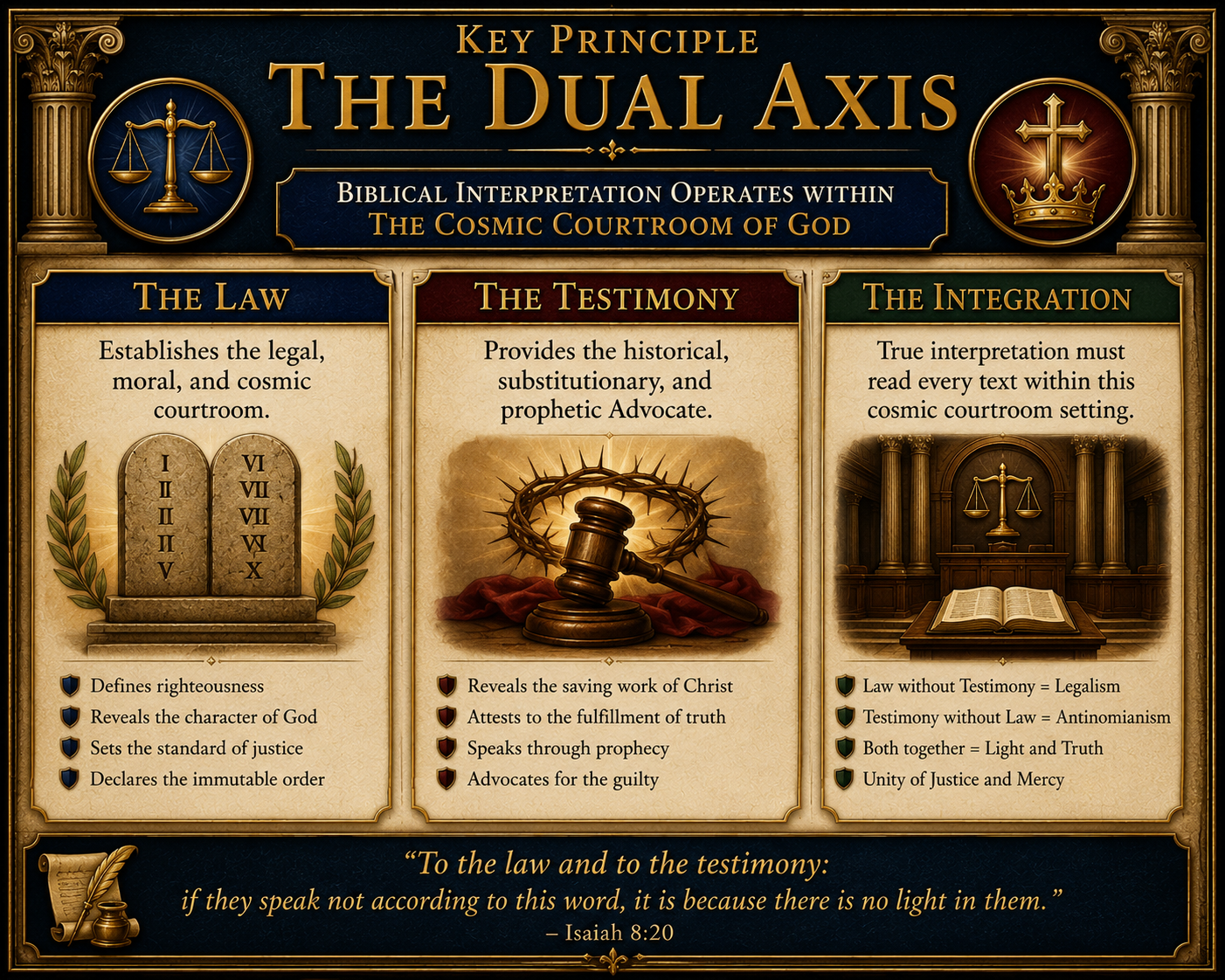
The Dual Axis of Salvation History
The history of redemption does not proceed along a single line that discards prior revelations. It operates on a dual axis: the Law reveals the unchanging nature of the sovereign God and the boundaries of His cosmic government; the Testimony reveals the historical, active execution of redemption by the Son within those boundaries.
To ignore the Law leaves redemption without an objective legal and moral framework, rendering grace meaningless. To ignore the Testimony leaves the Law as an instrument of condemnation without a Mediator, rendering salvation impossible.
Chapter
Chapter 2: The Constitution of Nomomartyria
Article I: The Authority and Plenary Inspiration of the Text
1.1 Inspiration. All Scripture—comprising the thirty-nine books of the Hebrew Bible and the twenty-seven books of the New Testament—is verbally inspired by God in its entirety (plenary, verbal inspiration).
1.2 Inerrancy. Scripture is the infallible rule of faith and practice, completely true in all it asserts, and free from error in its original autographs.
1.3 Self-Sufficiency. The Bible is totally self-contained and self-authenticating. It requires no external historical, philosophical, or psychological paradigm to unlock its core theological meaning.
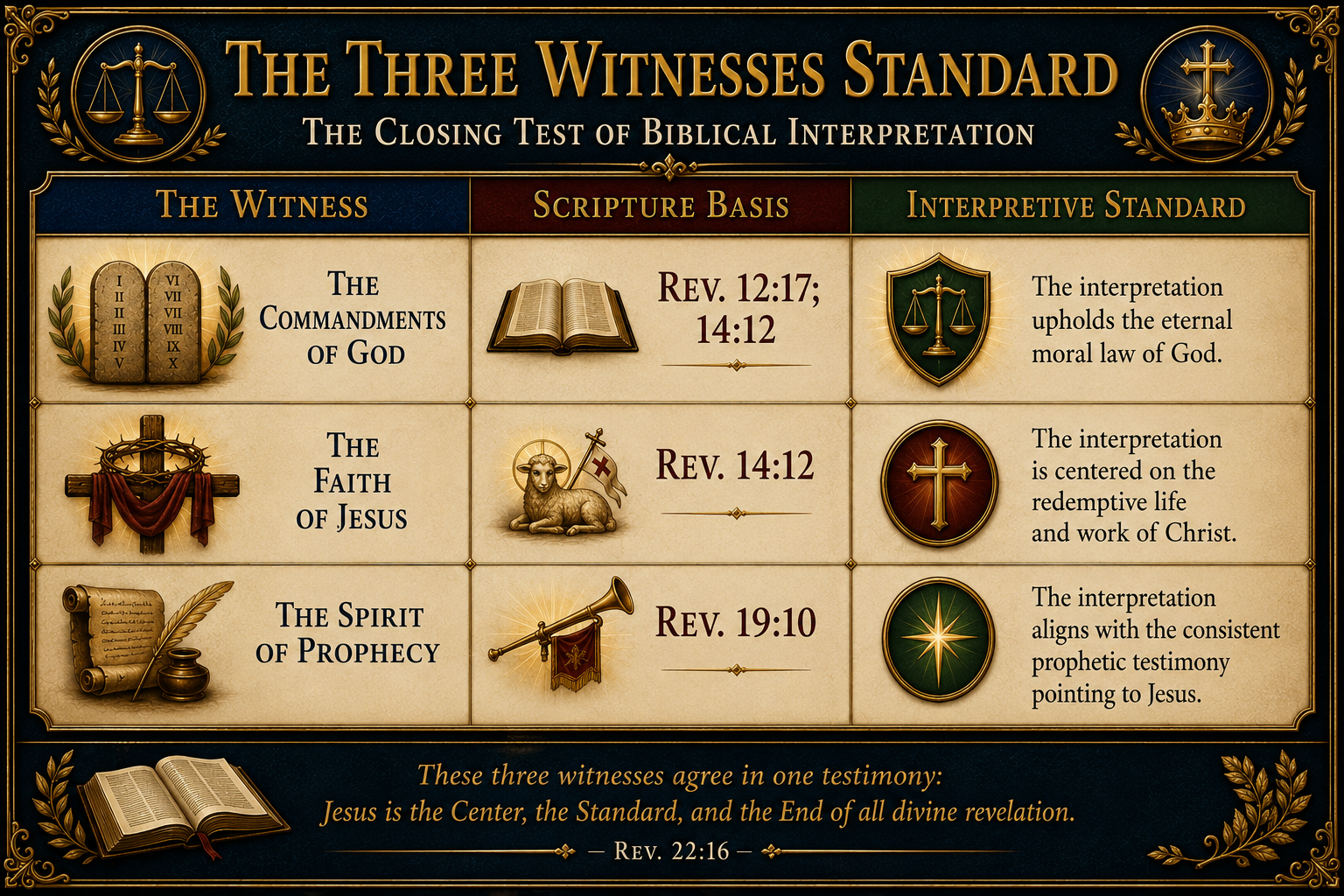
Article II: The Triadic Canonical Standard
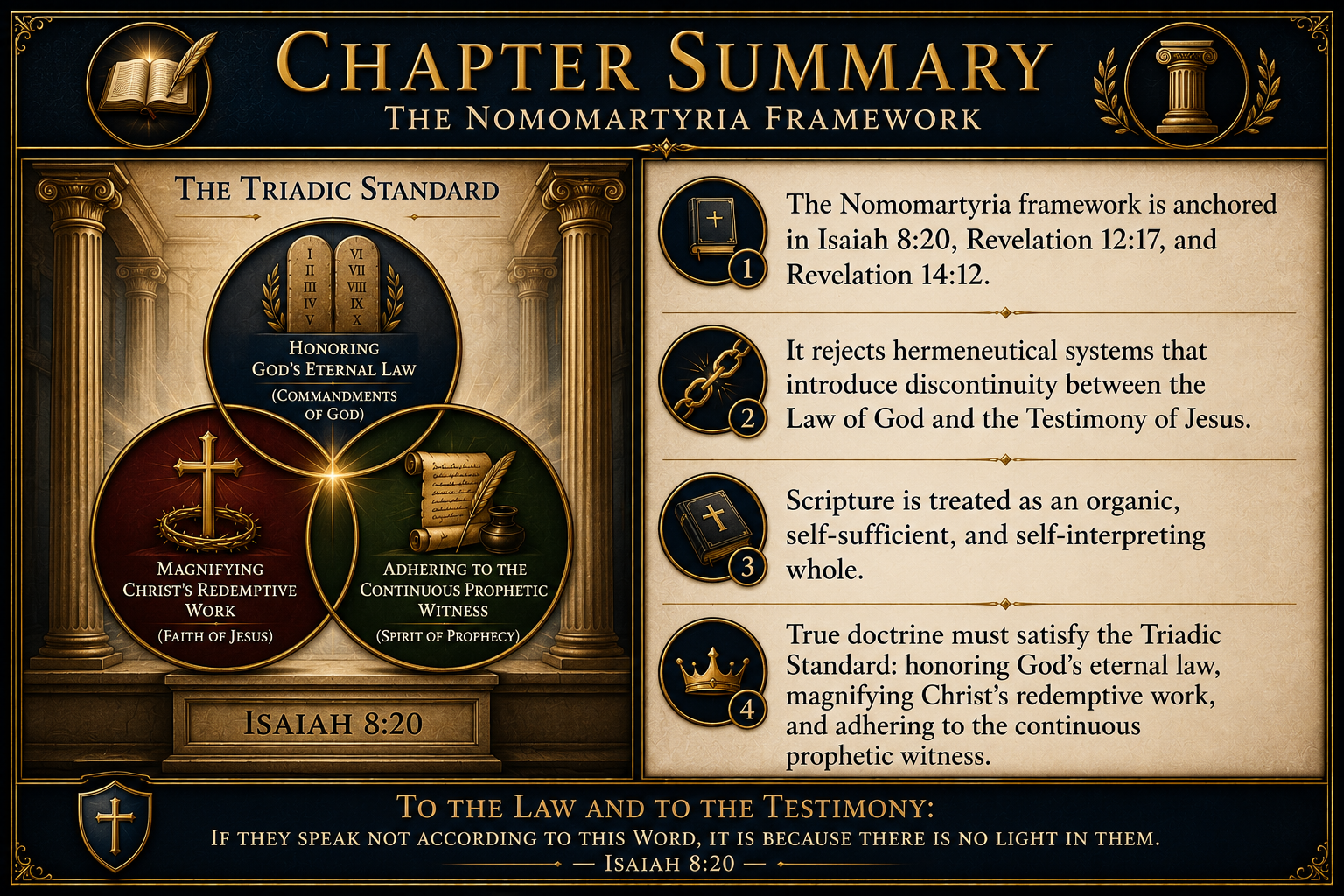
The ultimate validation of any theological synthesis within this framework must satisfy three apocalyptic criteria drawn from the writings of John the Revelator. These are not independent tests; they form a mutually reinforcing triad:
Article III: Interpretive Jurisprudence
3.1 The Principle of Total Harmony. No single passage may be interpreted in a manner that isolates it from or brings it into conflict with the collective body of biblical truth.
3.2 The Non-Evolution of Divine Truth. While divine revelation is progressive in its execution and clarity, it never alters its underlying principles. New revelation expands, clarifies, and deepens prior revelation; it never contradicts, replaces, or abolishes it.
Chapter
Chapter 3: Statement of Faith
I. The Godhead
We believe in one God, eternally existing in three coequal, coeternal Persons: the Father, the Son, and the Holy Spirit. This triune God is characterized by absolute holiness, omniscience, omnipotence, and immutability. His character is perfectly expressed in His Law, which is as eternal and unchangeable as He is.
II. The Mediator and His Testimony
We believe that Jesus Christ is God manifest in the flesh—fully God and fully man. He is the active Agent of creation, the historical Center of redemption, and the supreme focus of all biblical prophecy. His life perfectly magnified the Law; His substitutionary death satisfied its legal demands; His literal resurrection vindicated the divine government; and His ongoing high-priestly mediation in the heavenly sanctuary applies the fruits of His victory to every believer.
III. The Two Pillars of Cosmic Government
We believe that the universe is governed by the moral law of God, condensed summarily in the Decalogue. This law is structural, not merely transactional; it defines the nature of love, righteousness, and order. Salvation is entirely by grace through faith in the Testimony of Jesus Christ, which cleanses the sinner from the guilt of transgressing the Law and, through the Holy Spirit, writes that same Law upon the heart of the believer.
Chapter
Chapter 4: The Remnant Standard
Defining the Remnant
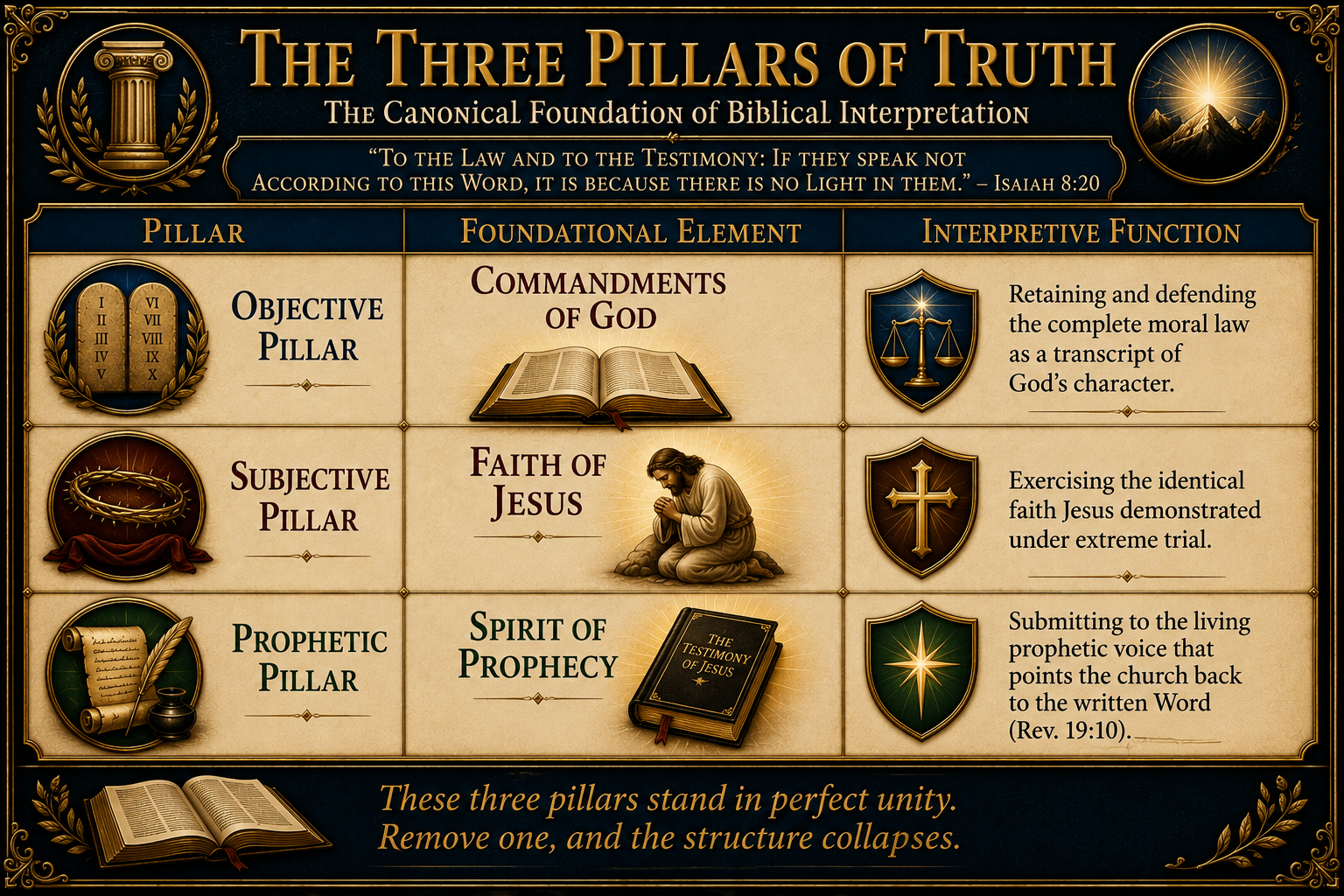
In the structural design of biblical prophecy, the term "remnant" (Hebrew: she'arith; Greek: loipos) does not denote an elite community defined by spiritual pride. It signifies a surviving body defined strictly by its adherence to an objective standard during periods of systemic apostasy. Three interlocking elements constitute this standard:
The Remnant Standard as Hermeneutical Filter
The Remnant Standard functions as a diagnostic lens. When evaluating any historical interpretation, cultural movement, or specific text, the exegete must ask: Does this reading obscure, compromise, or bifurcate either the Commandments of God or the Testimony of Jesus? If it damages either pillar, it represents an interpretive deviation that fails the test of canonical continuity.
Questions for Reflection
- In what ways have modern theological frameworks unintentionally created a false dichotomy between the Old Testament Law and New Testament grace?
- How does anchoring our interpretive method in the apocalyptic texts of Revelation protect us from purely cultural or subjective interpretations?
- What are the practical dangers of attempting to understand the Testimony of Jesus without anchoring it firmly in the Commandments of God?
VOLUME II
Interpretation
Parts II–VII
PART II
First Principles
Chapter
Chapter 5: The Ontological Nature of Truth
1. The Crisis of Epistemological Fluidity
In the landscape of contemporary theology, truth has been largely decoupled from its ontological moorings. Under the influence of late-modern pragmatism and postmodern linguistic theory, truth is frequently treated as a fluid construct—either an experiential sentiment validated by individual feeling (existentialism) or a communal agreement maintained by an ecclesiastical body (cultural linguisticism).
Nomomartyria completely rejects these subjectivist paradigms in favor of Divine Realism: truth is objective, absolute, non-evolutionary, and permanently grounded in the unchanging essence of the Triune God.
2. The Triune Triad of Truth
Biblical truth presents itself through three unified dimensions. To alter one is to distort the others:
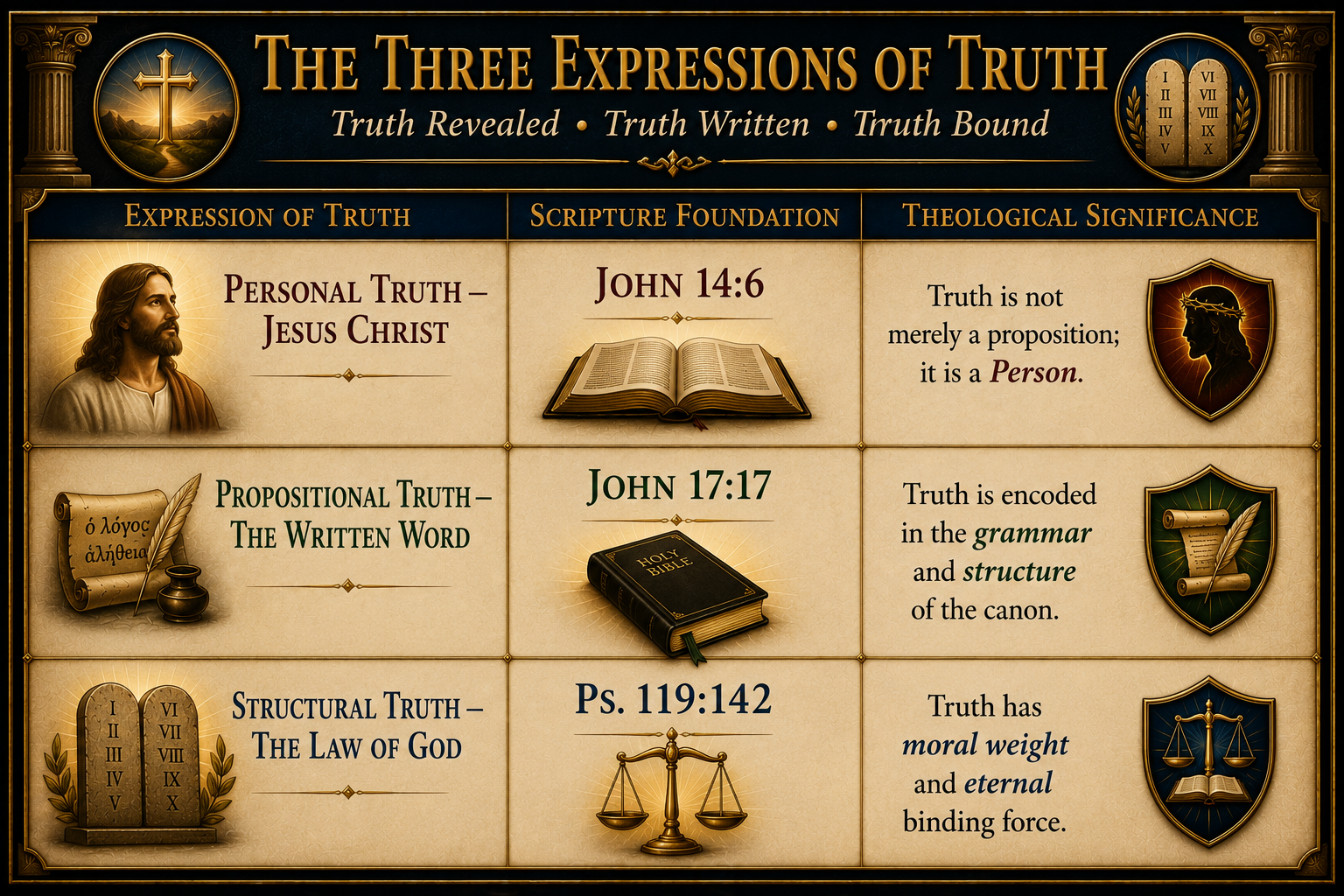
Separating the personal truth of Christ from the propositional truth of the written Word produces a subjective, culturally pliable Christ. Separating the written Word from the structural truth of the Law results in empty intellectualism that lacks moral weight and transformative power.
3. Verbal Realism and the Immutability of Meaning
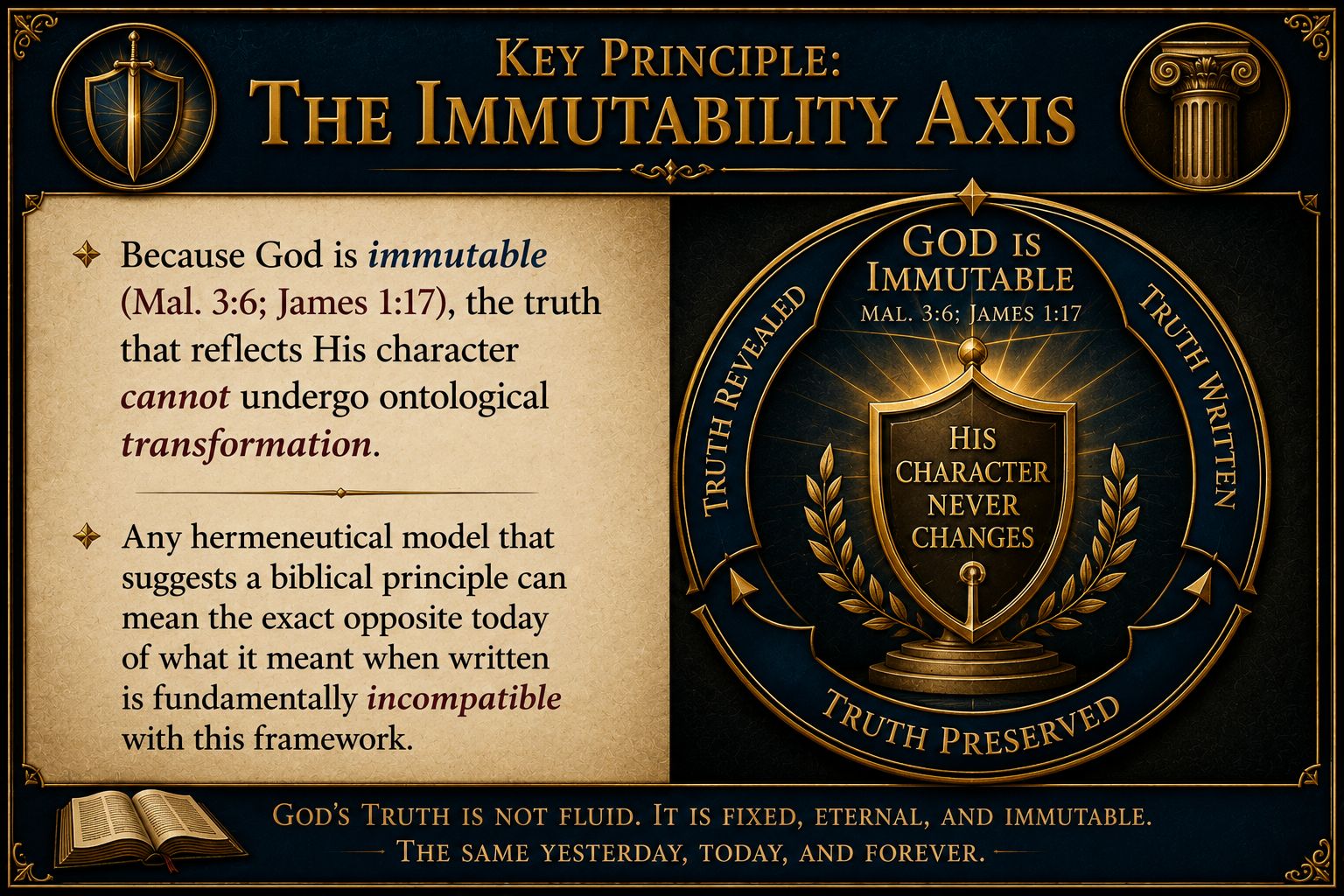
A core principle of this framework is that truth is permanently embedded within the literal grammar of the text. God did not inspire vague, non-verbal concepts that human writers later clothed in culturally conditioned language. He oversaw the precise selection of words (plenary-verbal inspiration). Consequently, truth does not evolve over time. Historical context clarifies the setting of a message; it never alters the underlying moral reality the text expresses.
Chapter
Chapter 6: Divine Revelation and the Limits of Human Capacity
1. The Necessity of Condescension
Because God is transcendent, infinite, and holy, He is naturally beyond the reach of independent human investigation. The human mind—finite in nature and compromised by sin—cannot discover God's character, cosmic laws, or redemptive plans through autonomous effort. True knowledge of God requires divine revelation: an intentional act of condescension in which the Creator communicates with His creation.
Nomomartyria distinguishes between two modalities of this revelation:
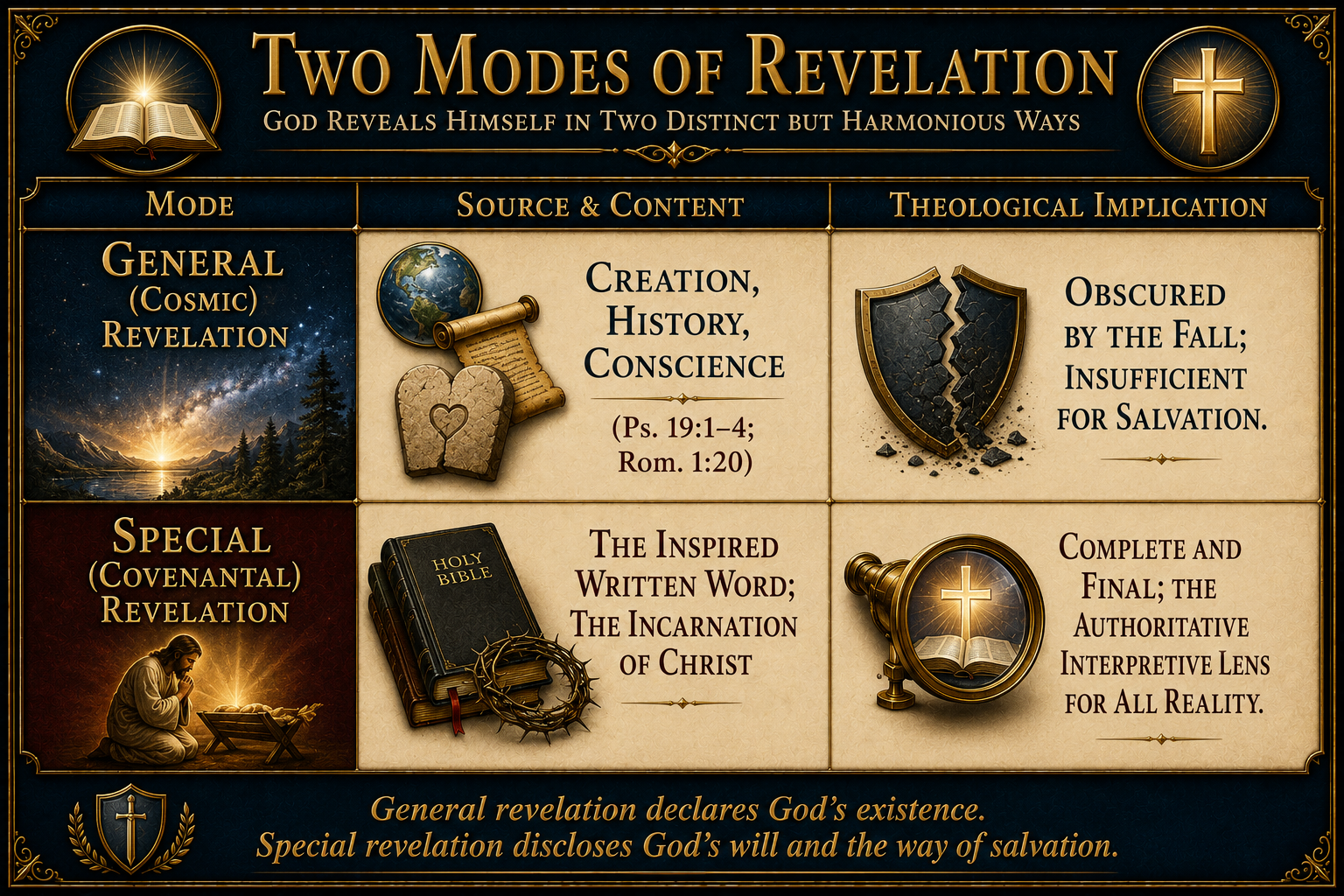
2. The Priority of Special Revelation
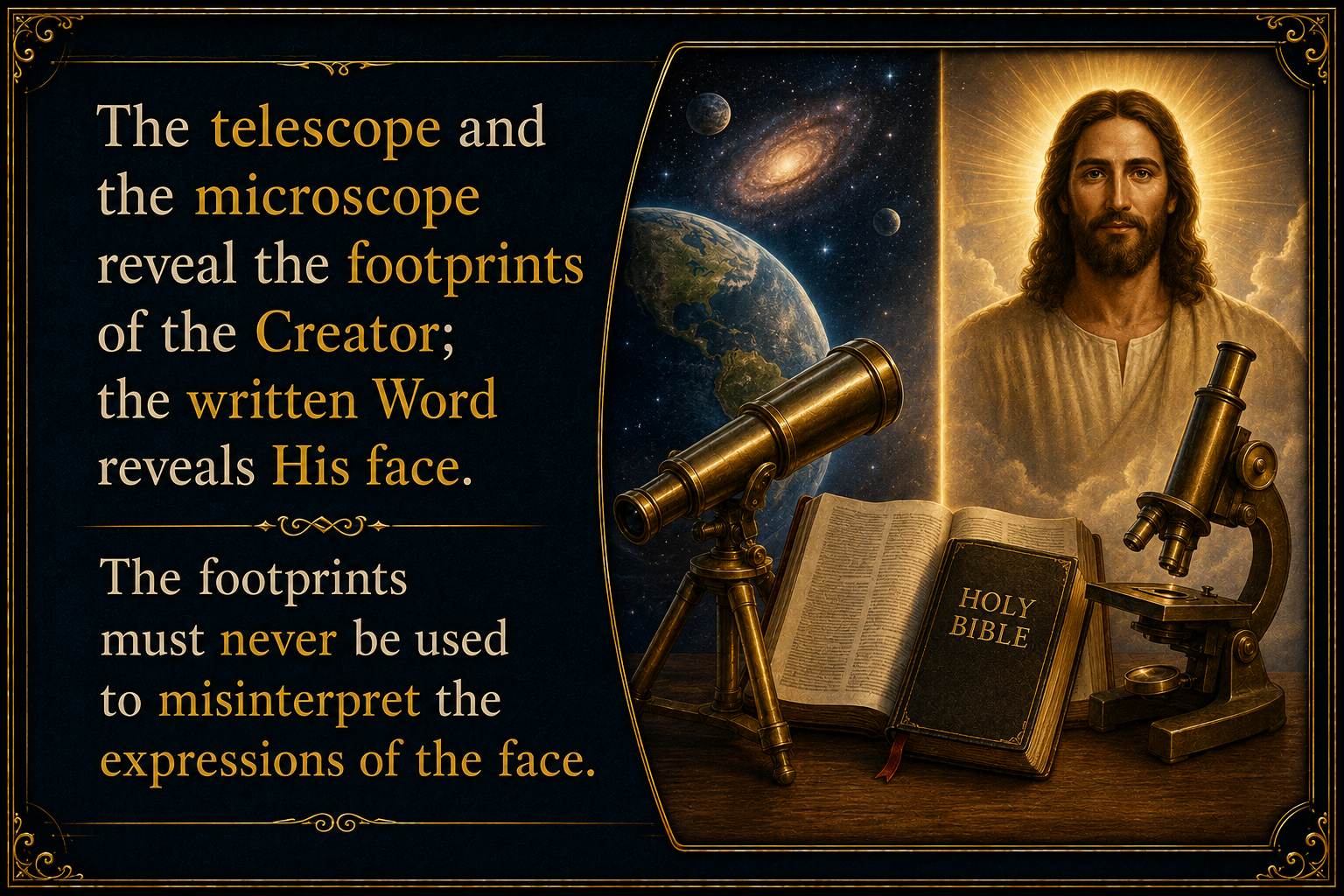
While General Revelation displays God's power and character through the created order, it must always be interpreted through the clearer lens of Covenantal Revelation. This framework rejects natural theology models that allow scientific theories, secular philosophies, or cultural consensus to override or correct the explicit text of Scripture.
Chapter
Chapter 7: The Juridical Authority of Scripture
1. Self-Authentication (Autopistia)
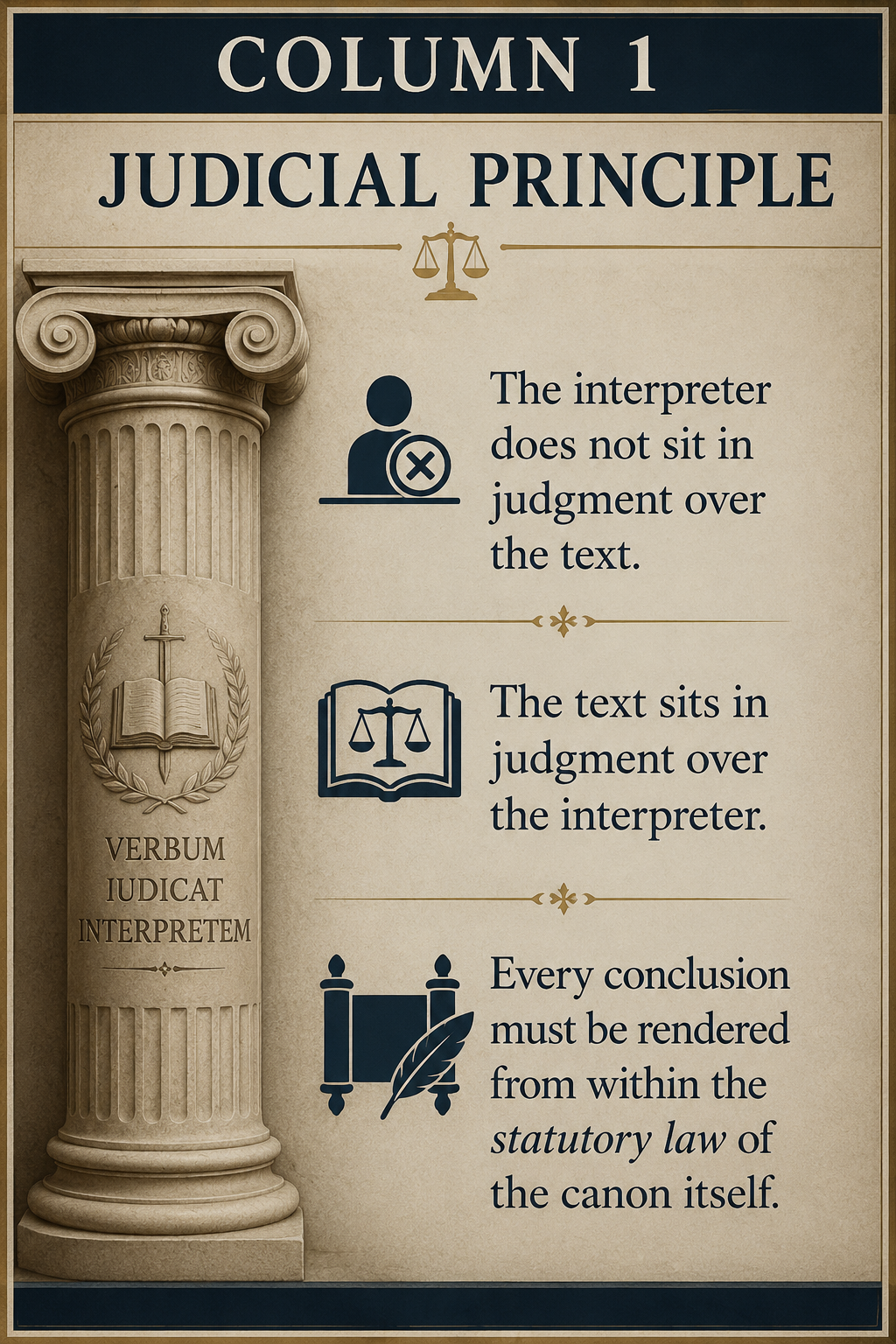
Scripture does not derive its authority from the endorsement of ecclesiastical councils, the consensus of academic scholarship, or the validation of archaeology. The text stands as its own witness. It is the Norma normans non normata—the rule that rules, which is itself ruled by no other standard. Every human thought, historical reconstruction, scientific model, and spiritual claim must submit to the textual data of the canon.
2. The Judicial Courtroom Structure
Within this framework, biblical exegesis functions as a formal judicial process. Scripture serves as the supreme statutory law of the cosmic courtroom; the interpreter functions as a clerk bound to the exact language of the statutes, not as an independent judge empowered to rewrite them.
3. Total Sufficiency (Sola Scriptura)
Scripture contains all the information, definitions, and internal structures required to unlock its own theological meaning. External keys—ancient Near Eastern myths, pagan philosophies, or modern psychological frameworks—may illuminate historical context, but they must never be permitted to redefine the explicit legal and moral terms already established by the canon.
Chapter
Chapter 8: The Character of God and the Reconciliation of Attributes
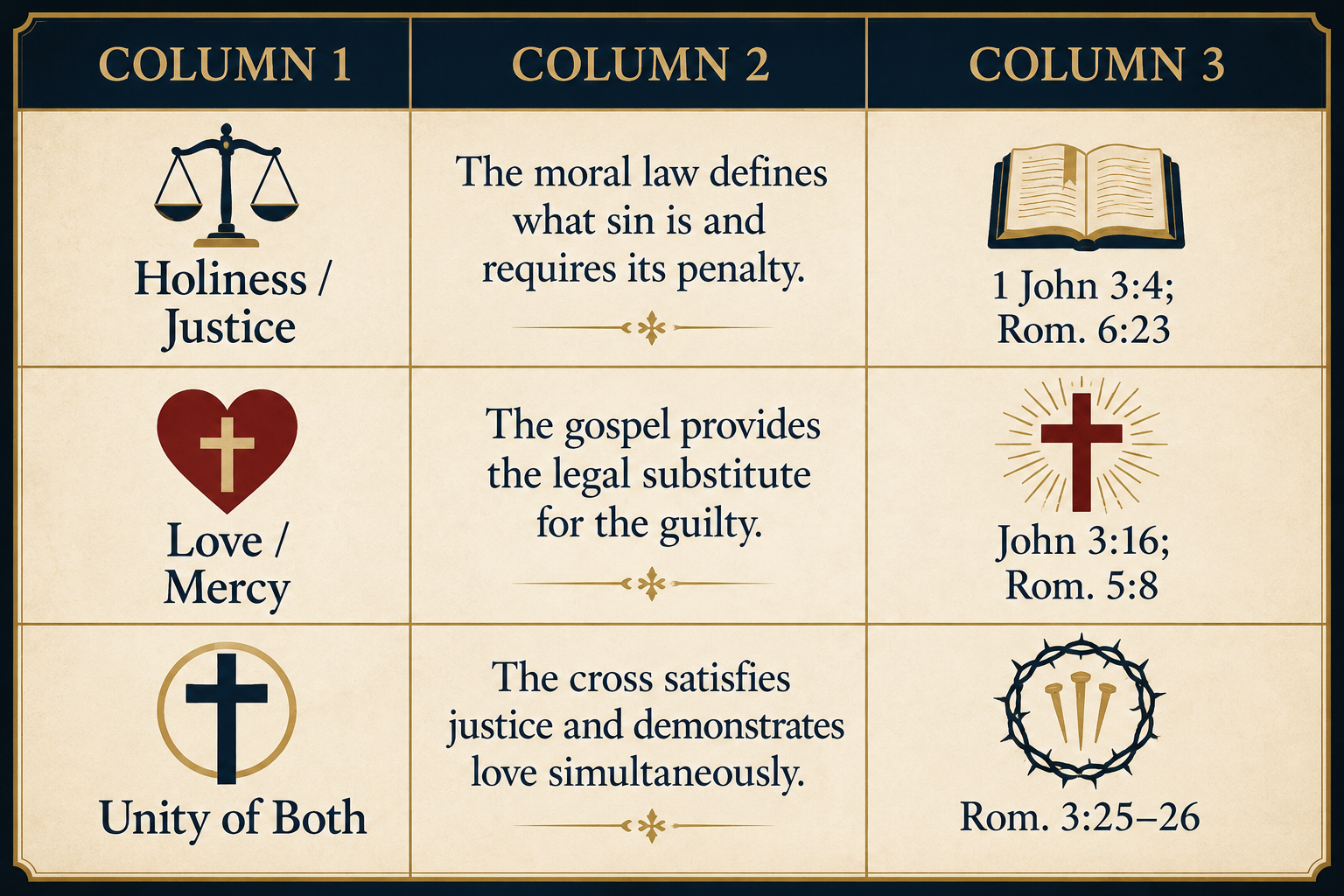
1. The Myth of Divided Attributes
A persistent error in modern theology is the tendency to divide God's character into competing attributes—pitting His justice against His love, or His holiness against His mercy. This view suggests that in the Old Testament God acted primarily from strict, unyielding justice, while in the New Testament He shifted to act almost exclusively from grace.
This bifurcation is both hermeneutically and theologically untenable. God's attributes are not competing impulses within the Godhead; they are perfectly unified facets of a single, immutable character.
2. The Cross as the Center of Symmetry
The absolute unity of God's character is most clearly displayed in the substitutionary death of Jesus Christ. The cross does not represent a change in God's character, nor does it portray a loving Son appeasing an angry Father. It is the place where God's perfect justice and infinite love achieve their most complete and public harmony. Because the moral law is so structurally eternal that it could not be set aside even to rescue humanity, its demands had to be fully satisfied—and they were, through the substitutionary life and death of the Lawgiver Himself.
Chapter
Chapter 9: The First Pillar — The Commandments of God
1. Definition and Structural Scope
The first pillar is the Commandments of God (Hebrew: Mitzvot; Greek: Entolai)—the eternal and immutable moral law that reflects the character of God, establishes the covenantal order of His creation, and finds its fullest summary in the Decalogue (Ten Commandments). This law is not a temporary legal parenthesis designed for ancient Israel; it is the cosmic blueprint of righteousness.
The moral law defines sin: "sin is the transgression of the law" (1 John 3:4). Without this permanent, unchanging standard, the concepts of guilt, judgment, substitution, and atonement lose all conceptual meaning.
2. Distinguishing Categories of Biblical Law
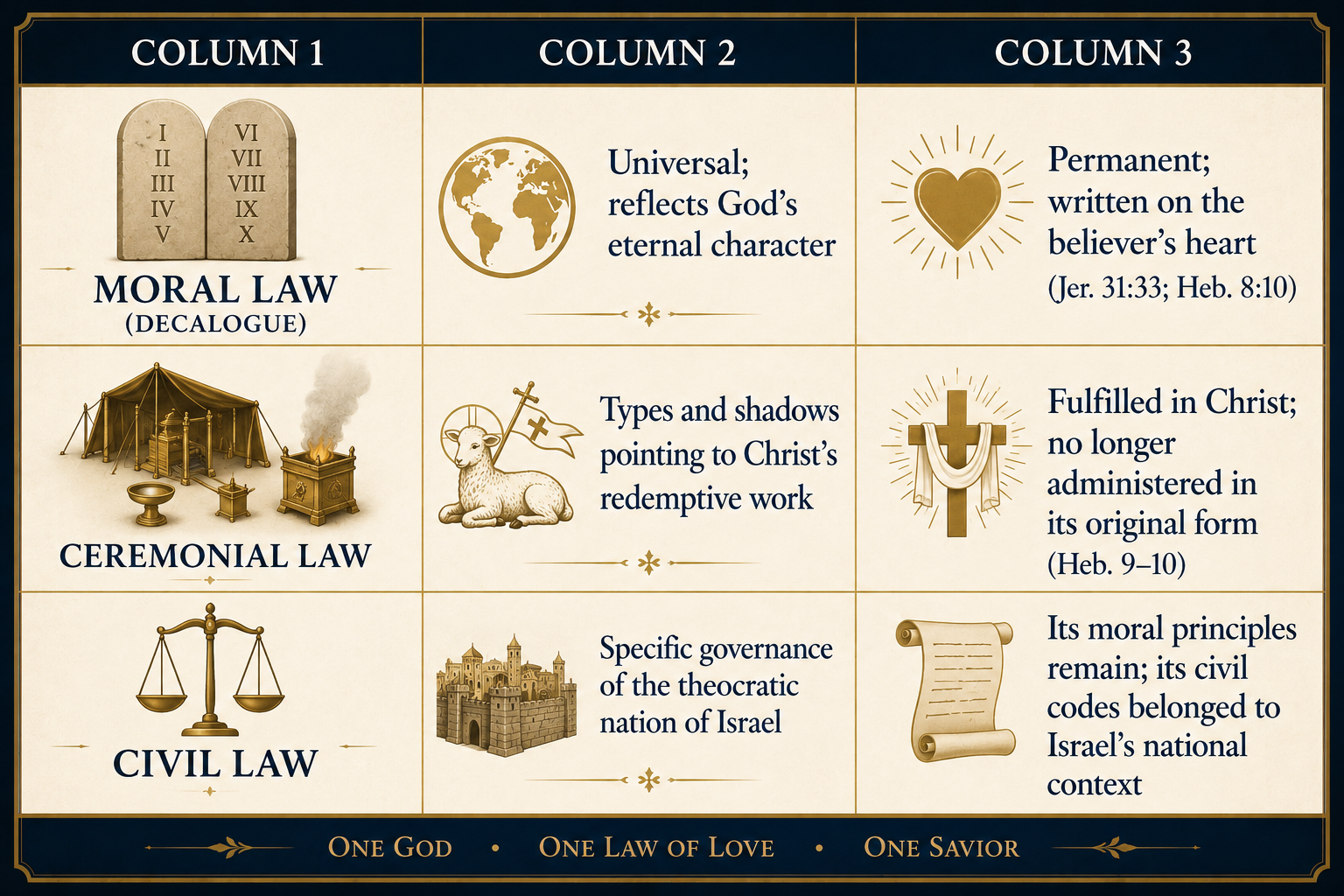
Within the hermeneutical framework, the Decalogue serves as the primary constitutional law. Every covenant administration, civil ordinance, and moral instruction in the New Testament epistles must be read as a contextual application of these ten foundational principles.
Chapter
Chapter 10: The Second Pillar — The Testimony of Jesus
1. Prophetic Definition
The Second Pillar is the Testimony of Jesus Christ. The angelic messenger declares to John that "the testimony of Jesus is the spirit of prophecy" (Rev. 19:10). This means the entire prophetic framework running through both Testaments is unified by a single focus: revealing the person, life, sacrifice, and high-priestly ministry of Jesus Christ. All true prophecy across the canon has this one orientation.
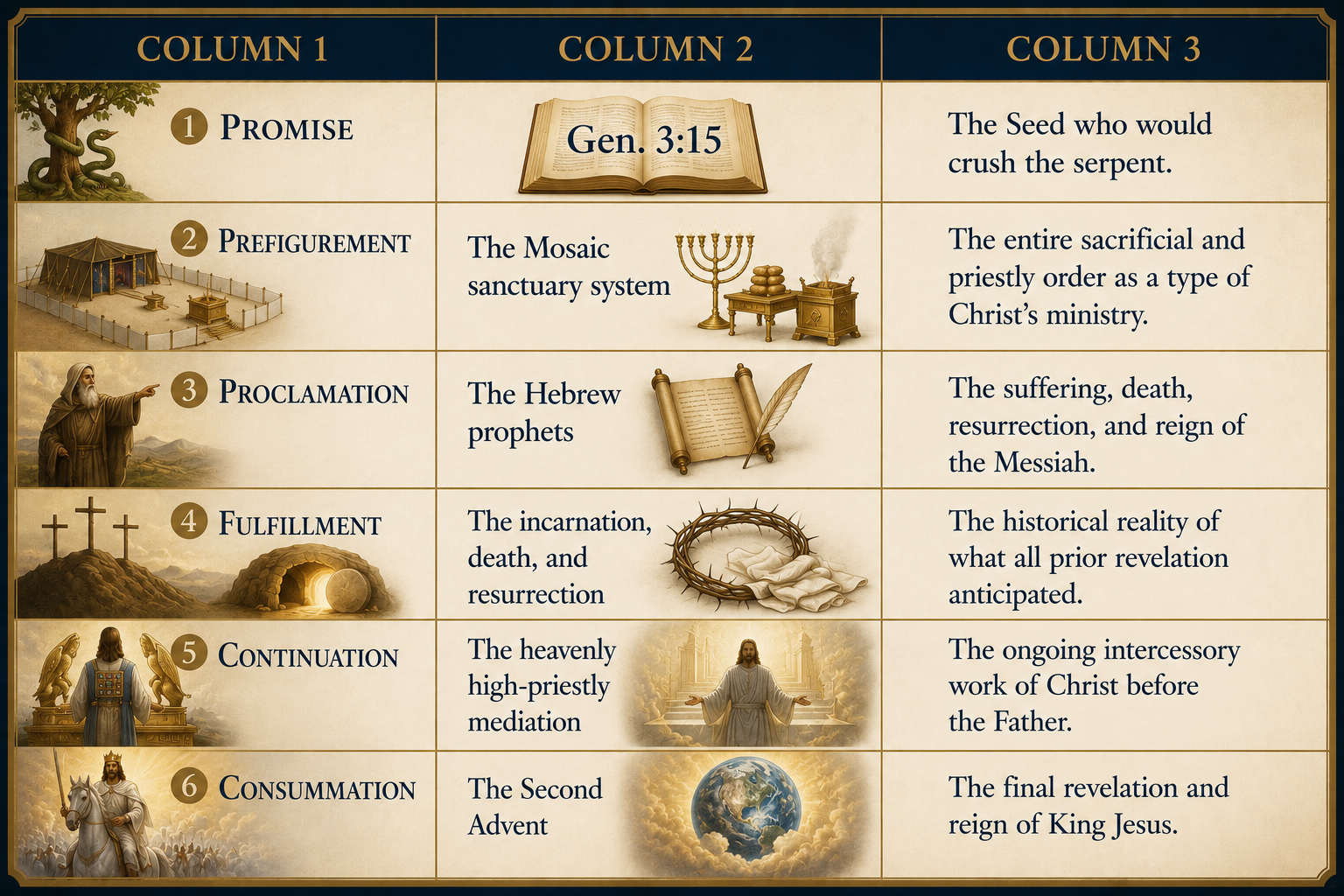
2. The Prophetic Timeline of the Testimony
The Testimony of Jesus is not abstract philosophy; it is an unfolding real history mapped across a structured canonical arc:
Chapter
Chapter 11: The Intersection of the Pillars
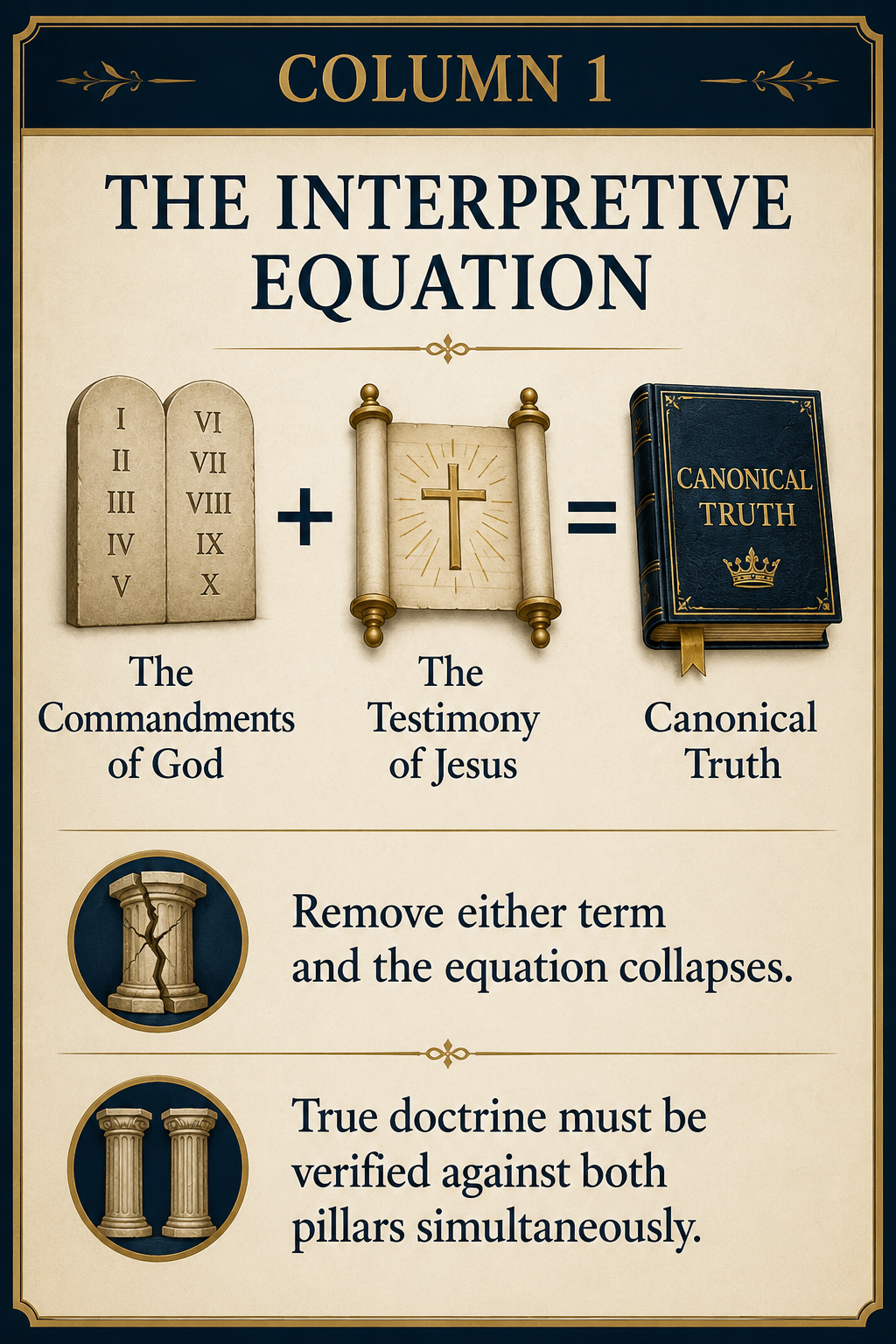
The Core Equation of Covenant Fidelity
The two pillars are not independent; they are structurally interdependent. The Law without the Testimony leaves sinners with a standard they cannot meet and no Advocate before the court. The Testimony without the Law leaves the gospel without a legal framework, making the concept of grace conceptually empty. Their intersection is the only terrain upon which sound biblical interpretation can stand:
The Apocalyptic Shield
The integration of the two pillars functions as an interpretive shield, guarding against theological drift. By validating every text against both the unchanging standard of God's Law and the unfolding prophetic truth of Christ, the researcher's conclusions remain anchored in the deep harmony of the complete canonical witness.
PART III
Biblical Epistemology
How Truth Is Known, Tested, and Organized
Chapter
Chapter 12: The Spiritual Architecture of Understanding
1. The Myth of Intellectual Neutrality
Modern biblical scholarship frequently operates on the assumption that the human mind can approach Scripture with complete objectivity—that raw intellectual skill and technical linguistic tools are sufficient to unlock its meaning. This assumption fails at a foundational level. Human reason has been deeply compromised by sin. Spiritual truths cannot be genuinely understood by an unregenerate mind regardless of its academic credentials (1 Cor. 2:14).
2. The Moral Component of Knowing
In the biblical model, understanding is directly tied to obedience. True knowledge is not merely an intellectual category; it is an active, experiential reality. The process follows an immutable sequence:
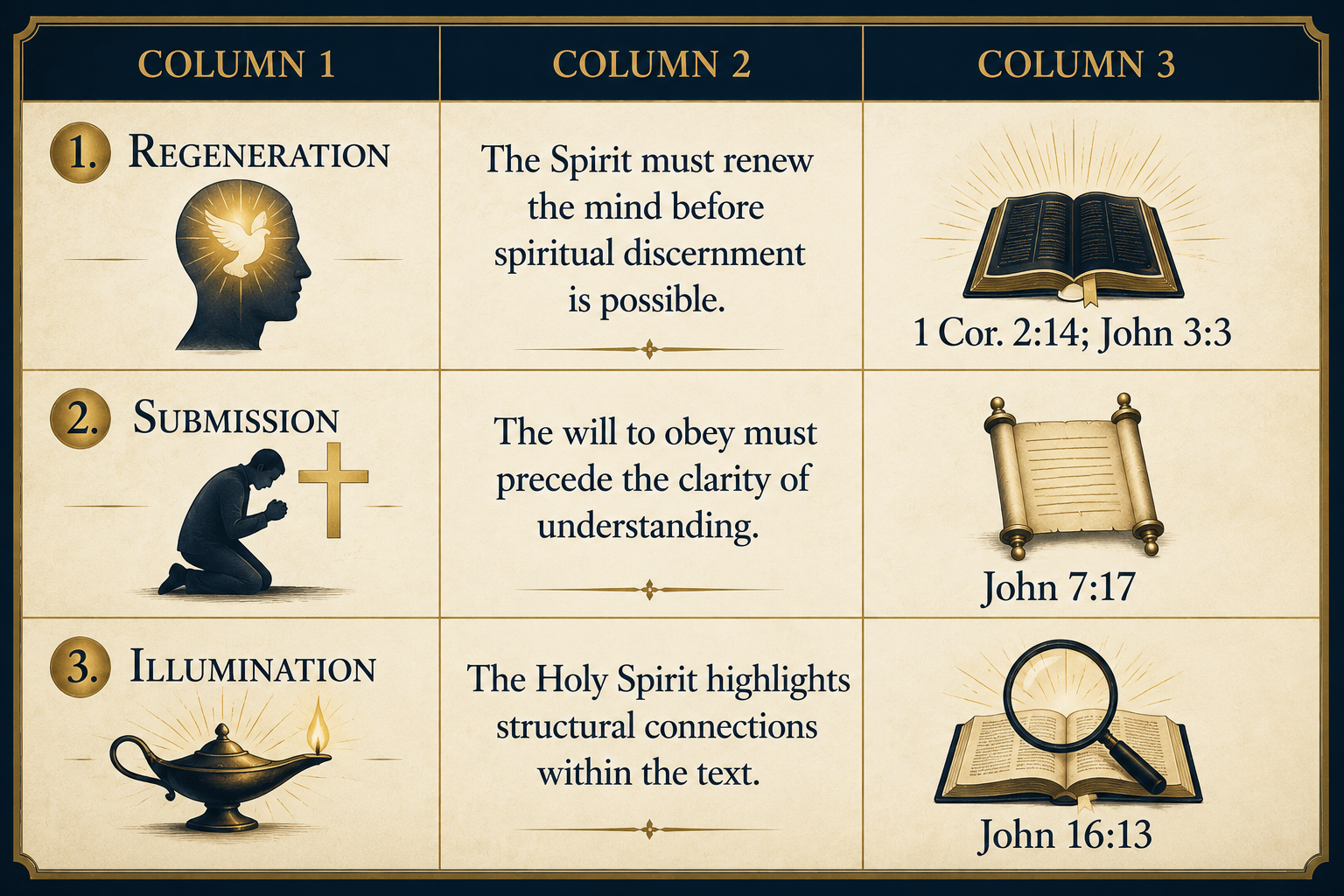
The path is irreversible in its order. When an interpreter refuses to align with a truth already clearly revealed, their capacity to understand deeper themes becomes systematically clouded. Obedience is the door through which insight passes.
Chapter
Chapter 13: The Structural Harmony of Scripture
1. The Non-Contradiction Principle
Because every book of the Bible was overseen by a single divine Mind, the entire canon possesses an absolute, non-contradictory harmony. One biblical author cannot disagree with or cancel out another. When two passages appear to contradict each other, the problem lies with the interpreter's understanding—not with the text itself.
2. Resolving Apparent Discrepancies
When an interpreter encounters a passage that seems to challenge a well-established biblical truth, the tension must be resolved internally through the following sequence:
- Examine Textual Variants. Check the original manuscript readings to rule out translation or copyist errors.
- Analyze Local Grammar. Examine the immediate paragraph to identify idioms or highly specific arguments.
- Trace Parallel Concepts. Cross-reference core ideas across the canon, allowing clearer passages to interpret the obscure.
Under no circumstances should an apparent discrepancy be resolved by appealing to sources outside the canon—whether historical documents, philosophical systems, or cultural assumptions.
Chapter
Chapter 14: Progressive Revelation and Canonical Continuity
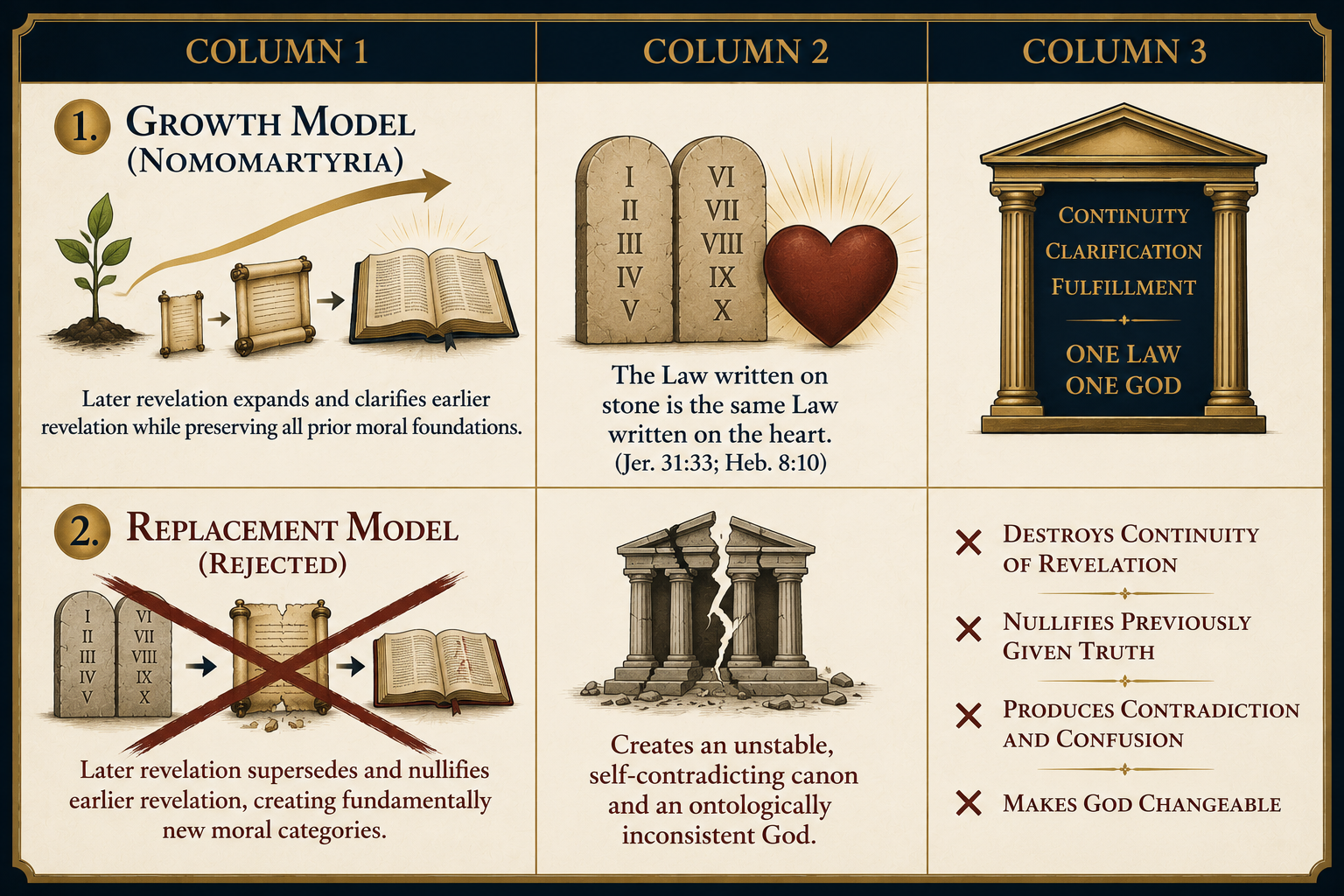
1. Growth, Not Replacement
God did not reveal His entire plan at once; He unfolded it progressively across millennia—from the simple promises of Genesis to the sweeping visions of Revelation. However, this framework enforces a critical distinction:
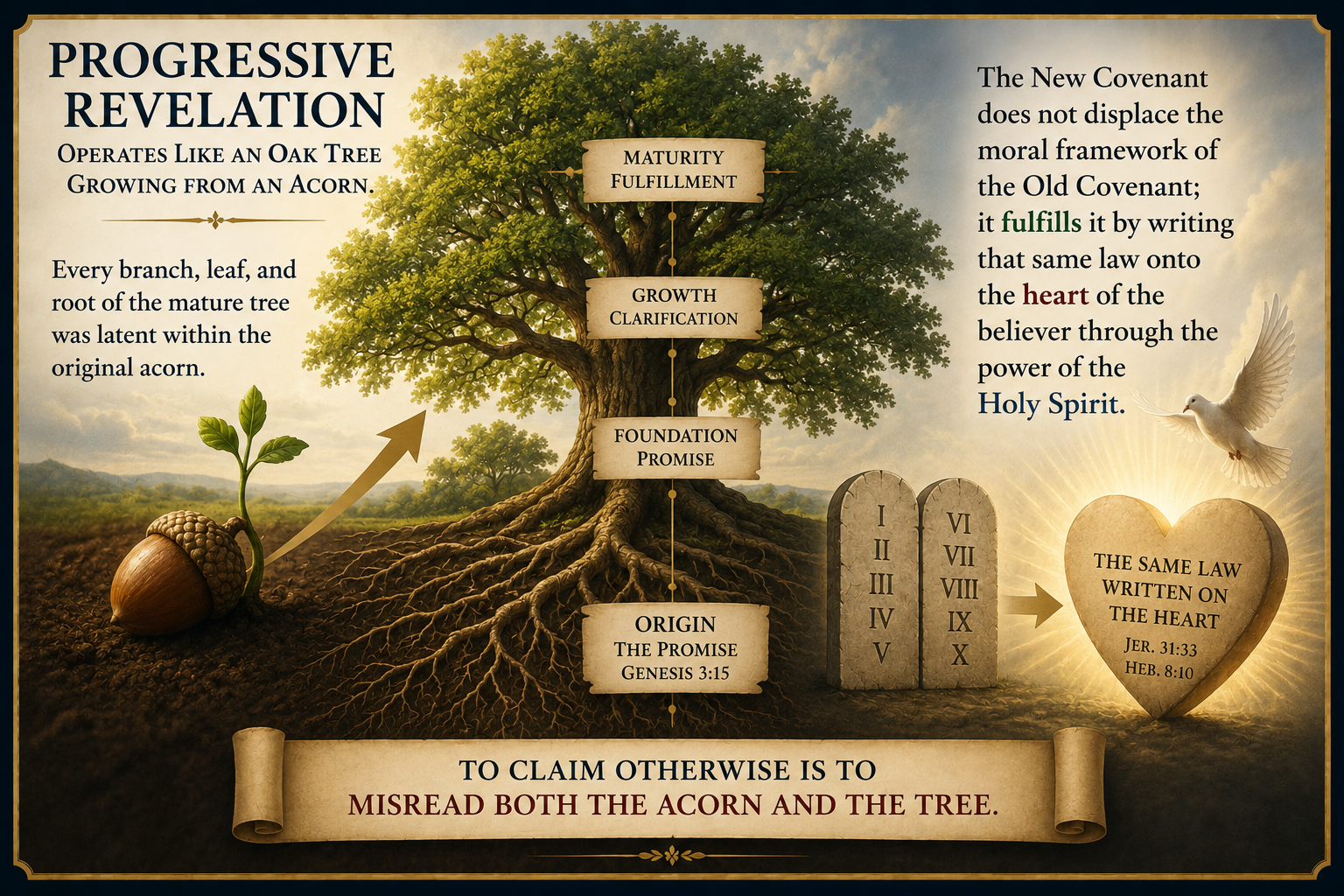
2. The Acorn and the Oak
Progressive revelation operates like an oak tree growing from an acorn. Every branch, leaf, and root of the mature tree was latent within the original acorn. The New Covenant does not displace the moral framework of the Old Covenant; it fulfills it by writing that same law onto the heart of the believer through the power of the Holy Spirit. To claim otherwise is to misread both the acorn and the tree.
Chapter
Chapter 15: The Judicial Hierarchy of Biblical Evidence
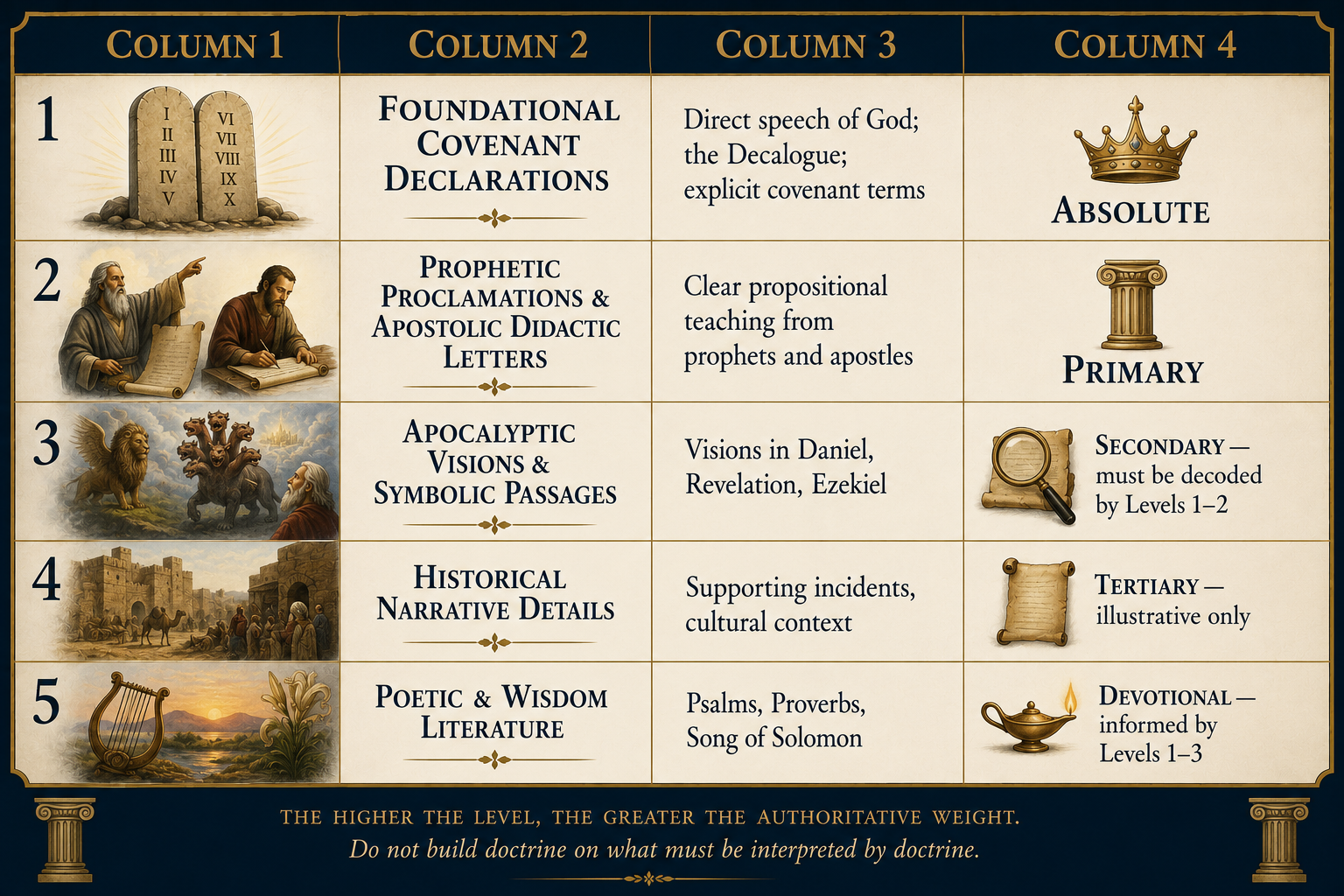
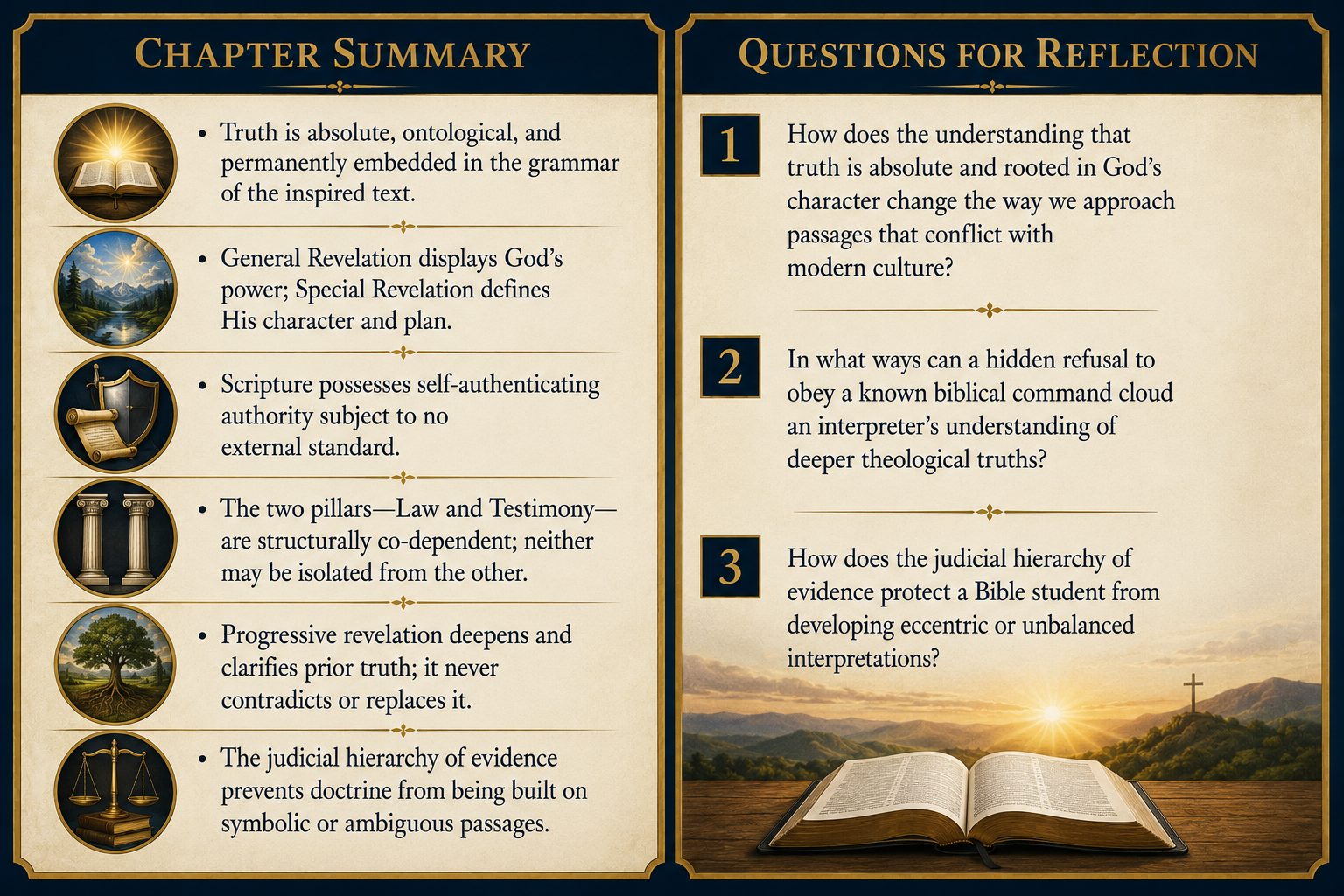
1. The Legal Weight of Evidence
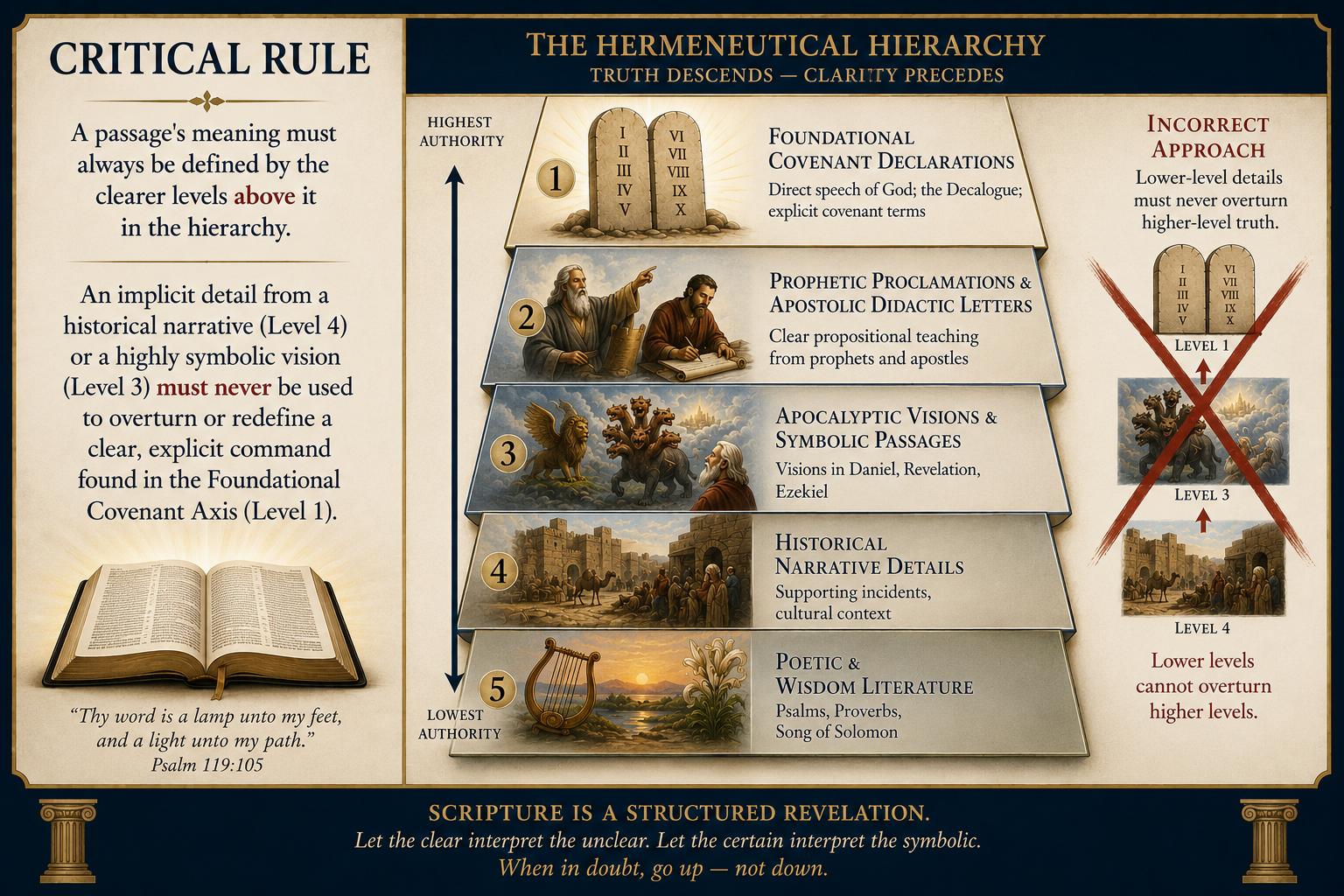
To minimize subjective bias, this framework organizes all biblical evidence into a structured hierarchy based on canonical clarity and legal weight. When building or testing a doctrine, evidence must be weighted according to the following index:
2. The Operational Rule
This hierarchy prevents the construction of complex doctrines out of ambiguous or highly symbolic texts.
PART IV
Hermeneutics
The Operational Laws of Canonical Exegesis
Chapter
Chapter 16: The Principle of Self-Exposition
1. Scripture as Its Own Expositor
The foundational axiom of this framework is Scriptura sui ipsius interpres—Scripture is its own expositor. The biblical text contains its own internal commentary system. No interpreter should need to rely on external philosophical keys, modern sociological theories, or non-canonical historical myths to unlock the core meaning of a passage. The canon is a self-decoding document.
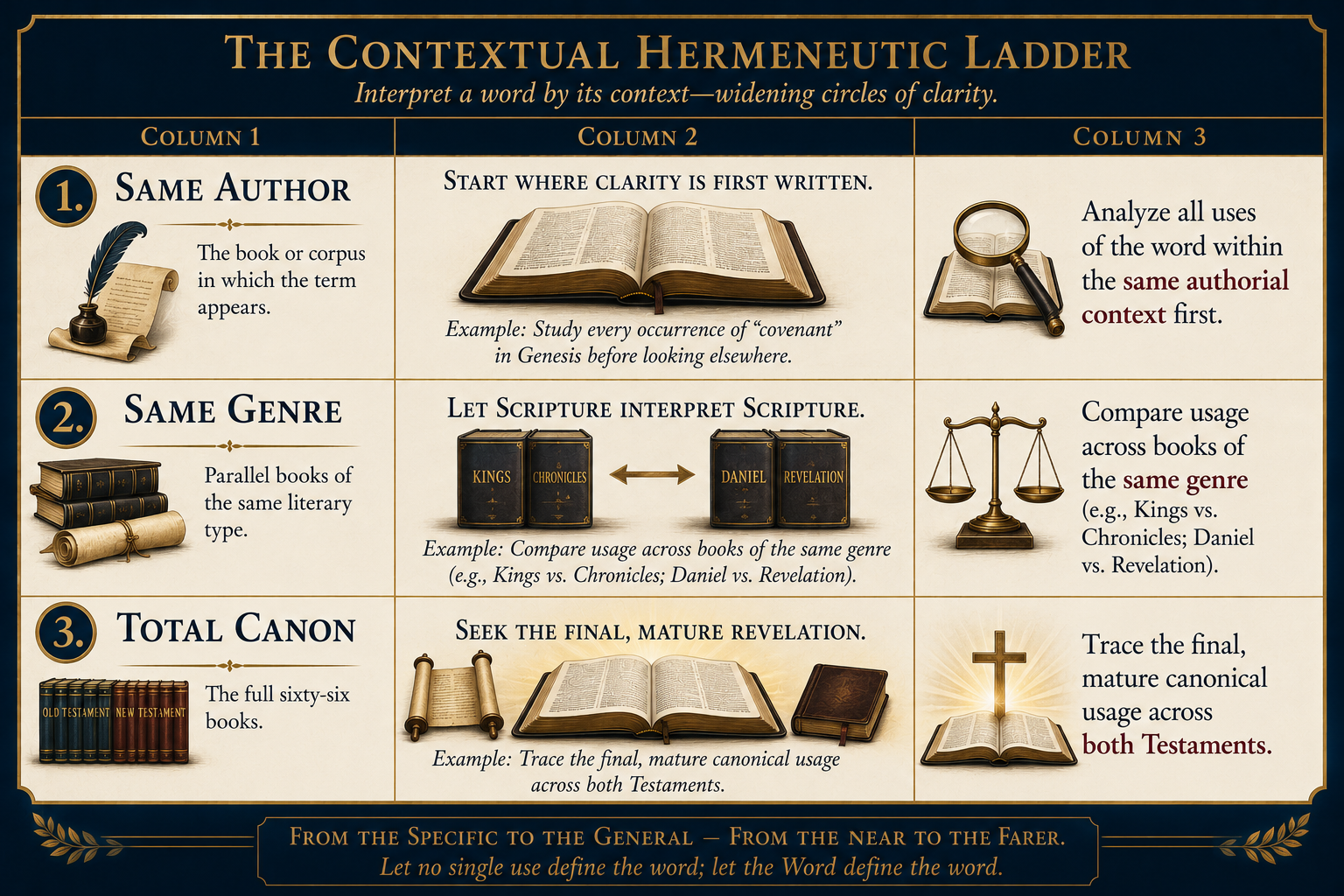
2. The Mechanics of Verbal Cross-Referencing
Self-exposition is not casual concordance work. It is a disciplined technical method of tracing verbal parallelisms across the canon. When an interpreter encounters an ambiguous phrase, the path to clarity follows a prescribed sequence:
By following this sequence, the text corrects the interpreter's subjective assumptions, replacing modern cultural equivalents with the Bible's own vocabulary definitions.
Chapter
Chapter 17: The Royalty of Context
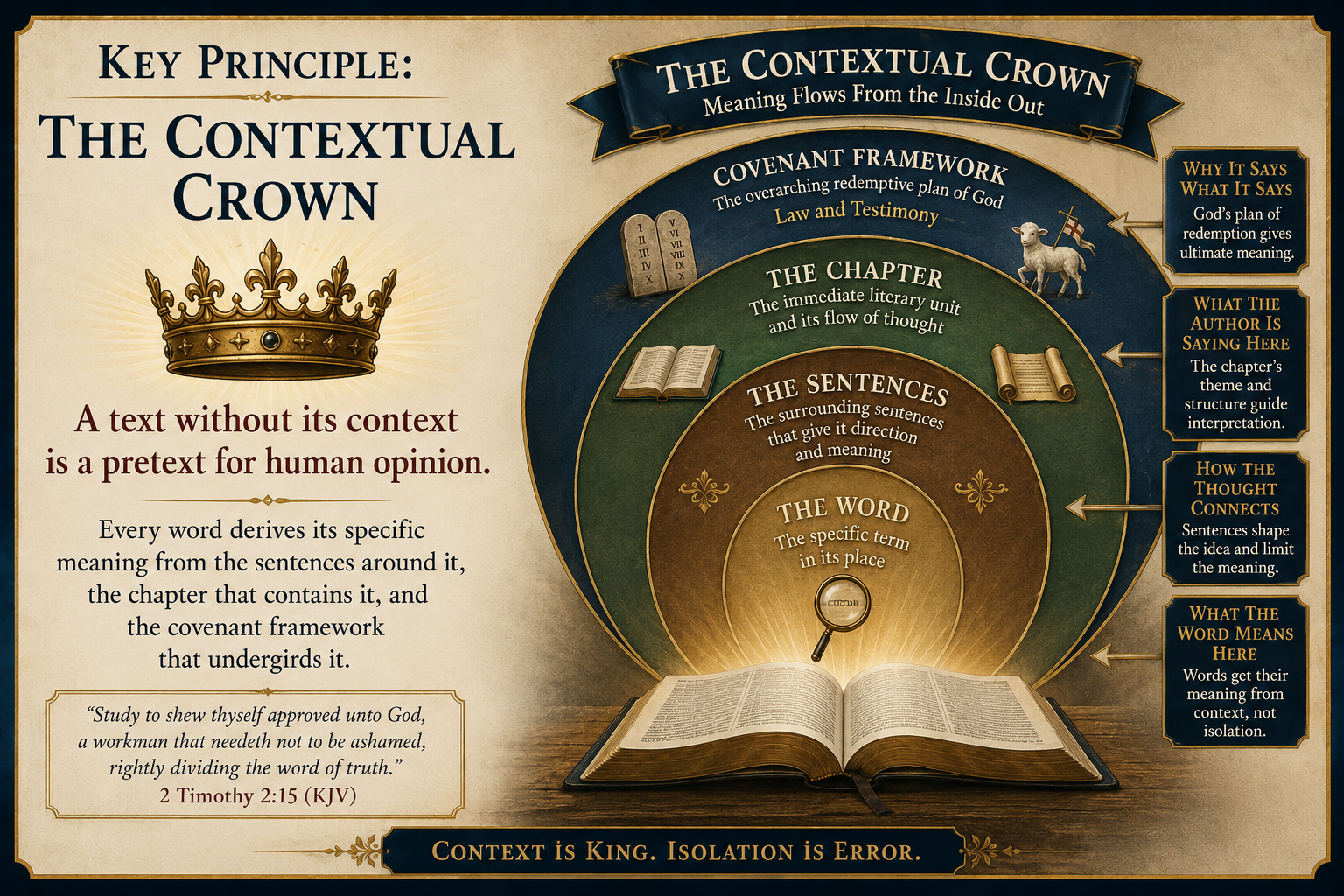
1. The Crime of Textual Atomization
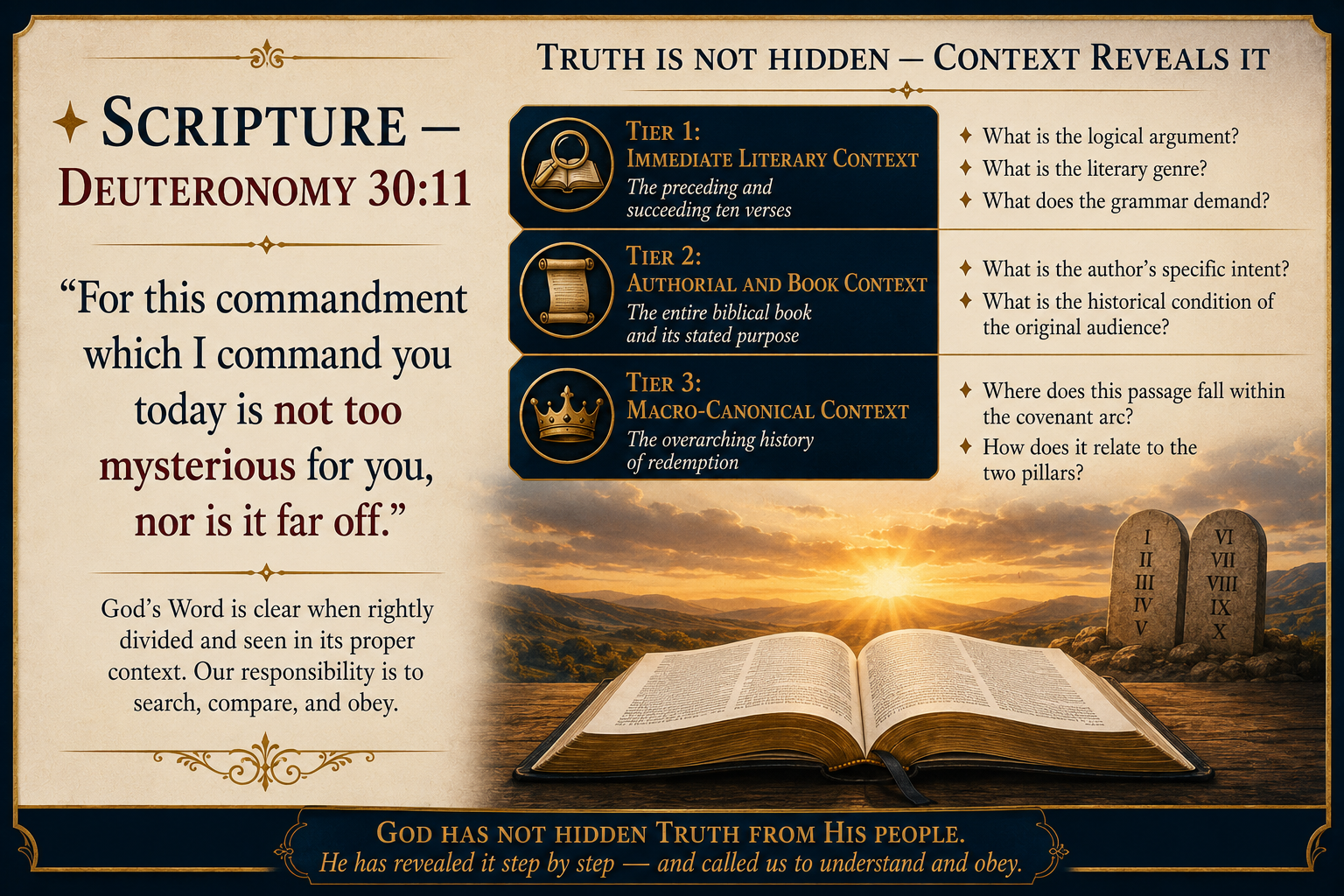
The most common source of heresy and doctrinal distortion is textual atomization—the practice of extracting a single sentence or verse from its literary surroundings and deploying it as an isolated proof-text. In this framework, context is not an aid to interpretation; it is the king that governs meaning.
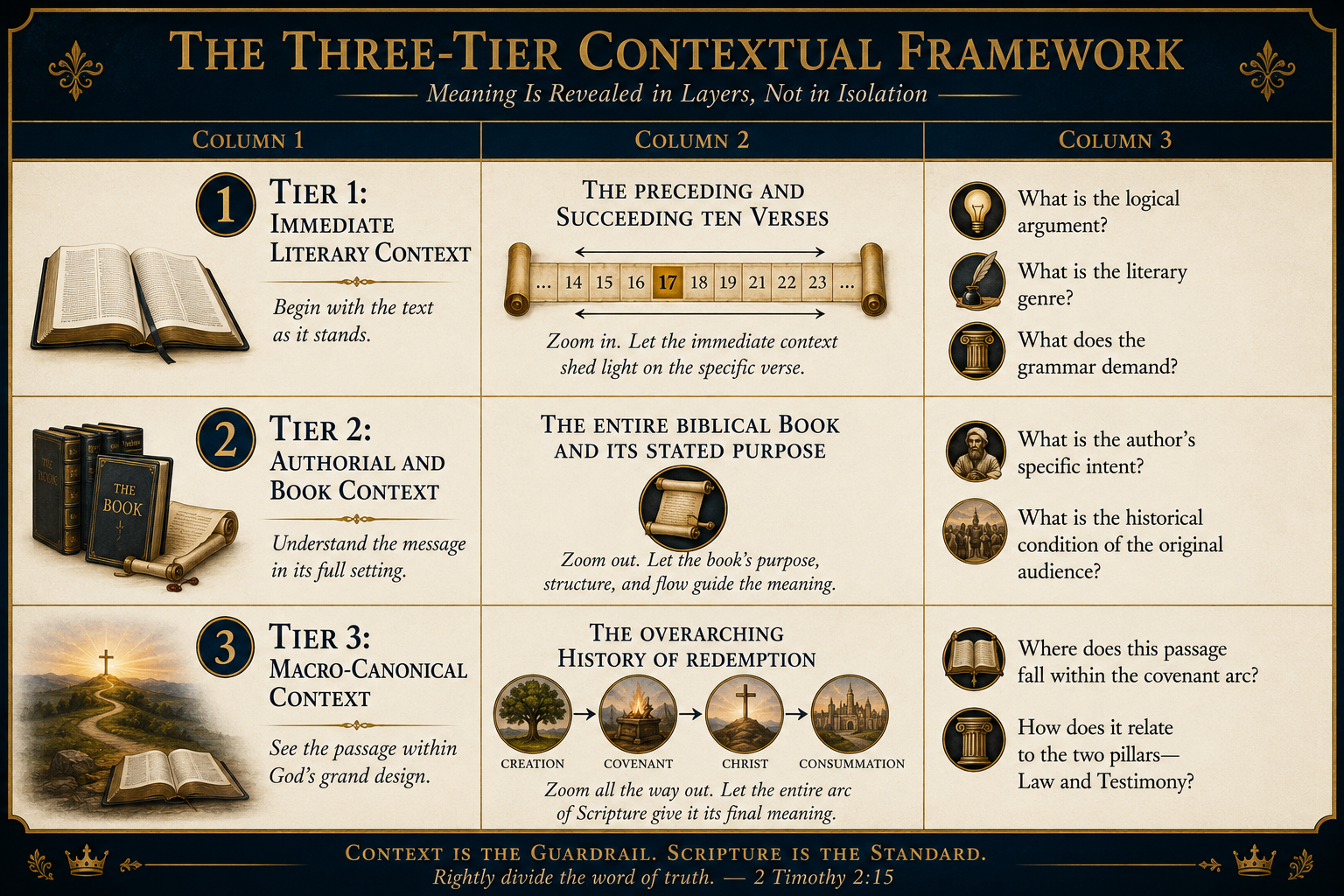
2. The Three-Tiered Contextual Audit
Before building any doctrinal conclusion from a passage, it must pass a three-tiered contextual audit:
Chapter
Chapter 18: Plain and Symbolic Language
1. The Default Axiom of Plain Literalism
This framework applies a balanced rule to biblical language: plain literalism by default; self-decoding symbolism by necessity. Every passage must be approached with the assumption that the author is speaking directly and literally, using the normal conventions of human grammar and history, unless the text itself provides clear reasons for a symbolic reading.
2. When Symbolism Is Warranted
An interpreter is authorized to move from a literal reading only when the text explicitly demands it. This demand occurs under two conditions:
- Physical Impossibility: The literal statement violates basic reality or contradicts established biblical facts (e.g., a multi-headed beast rising from the sea in Rev. 13).
- Explicit Structural Indicators: The text uses signaling language such as "mystery," "sign," "parable," or "likeness" (e.g., Rev. 1:20).
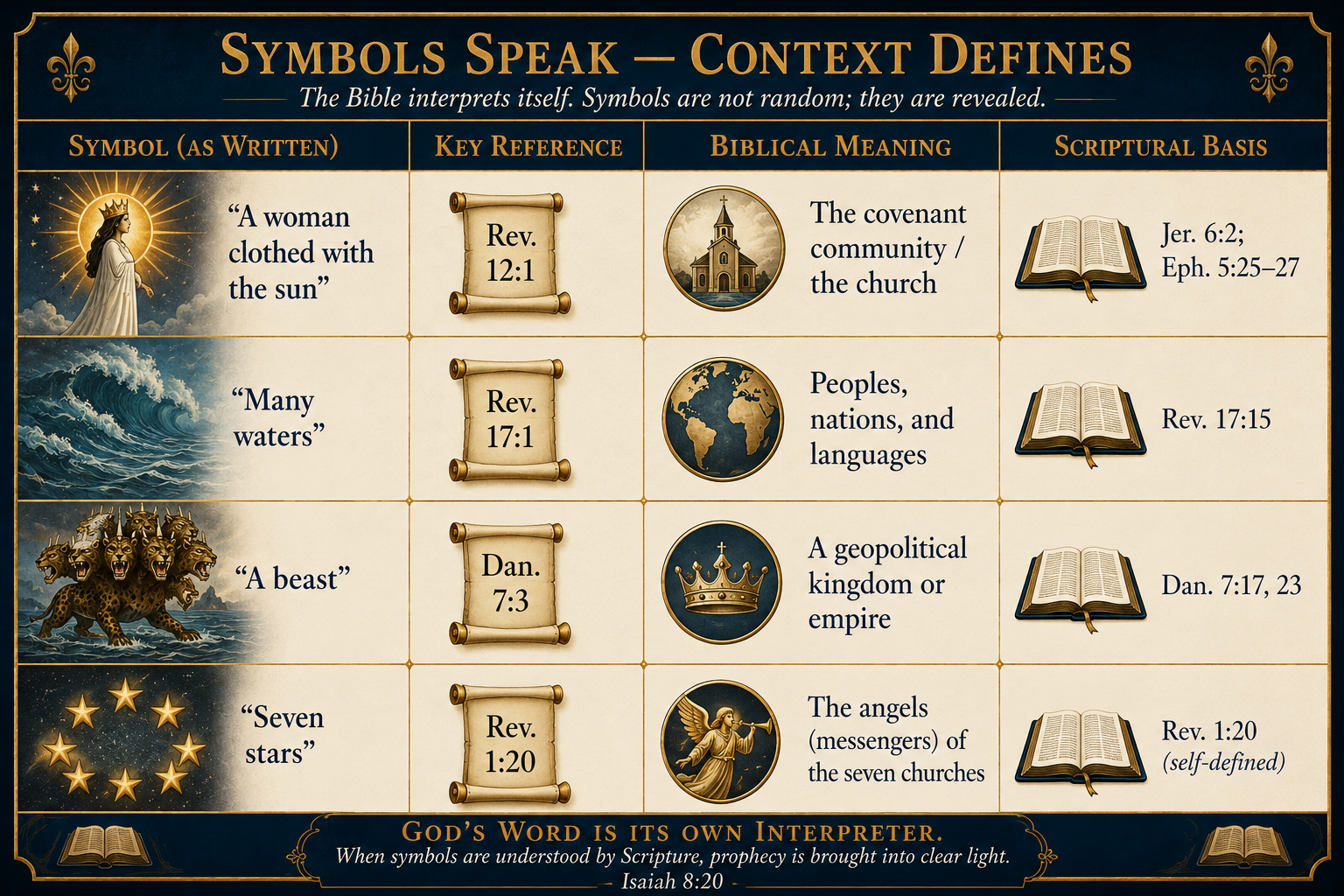
3. The Canonical Decoding Rule
When a passage is identified as symbolic, the interpreter is forbidden from inventing an explanation based on imagination or contemporary headlines. The symbol must be decoded using the explicit definitions the Bible supplies elsewhere in the canon.
Chapter
Chapter 19: The Five Laws of Exegesis
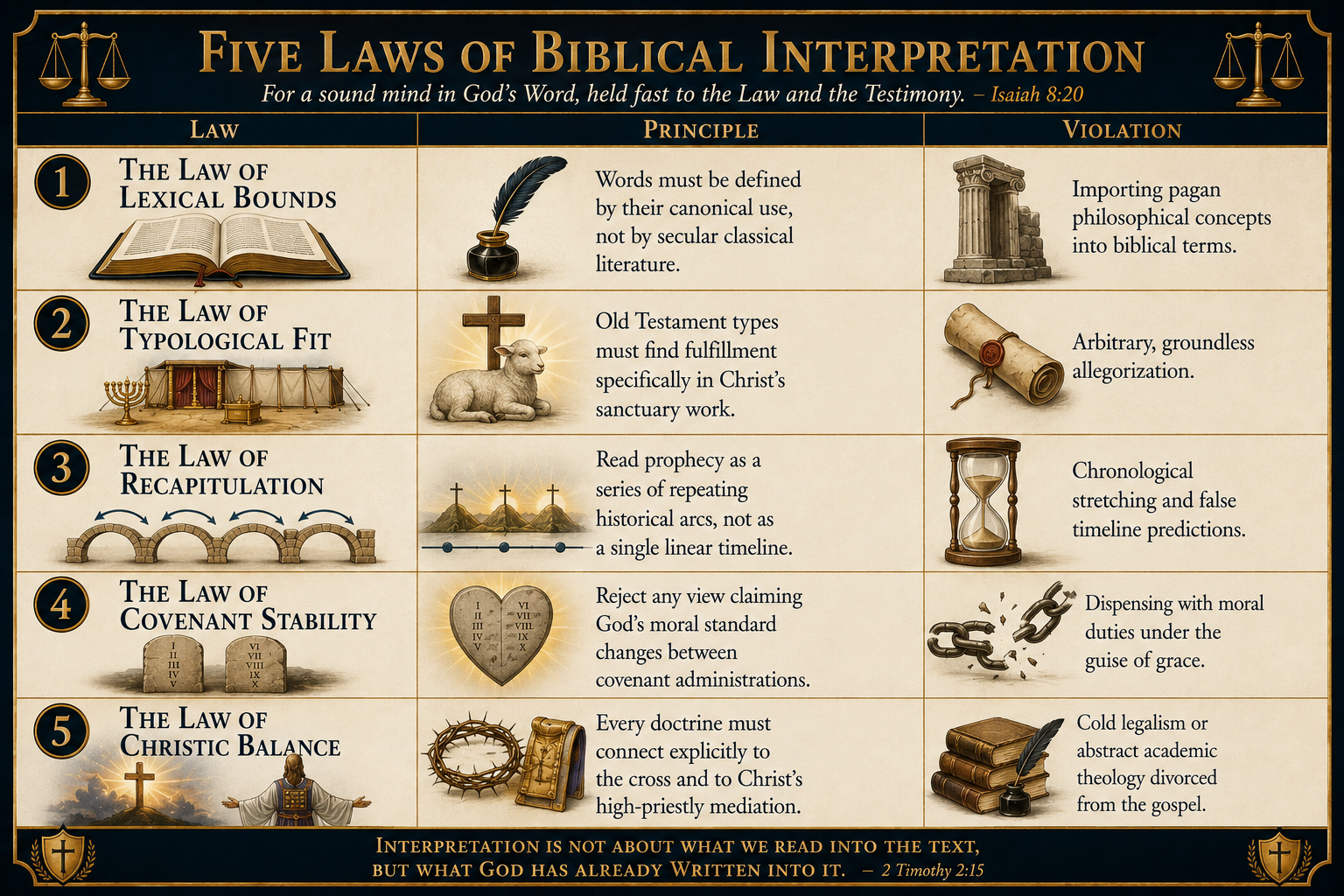
The Statutory Framework
To protect the interpretive process from human bias, this framework enforces five operational laws. These are not suggestions; they are the binding statutes of canonical exegesis. Every theological conclusion produced within this institute must demonstrate explicit adherence to all five.
Chapter
Chapter 20: The Axioms of Nomomartyria
The Mathematical Logic of Canonical Truth
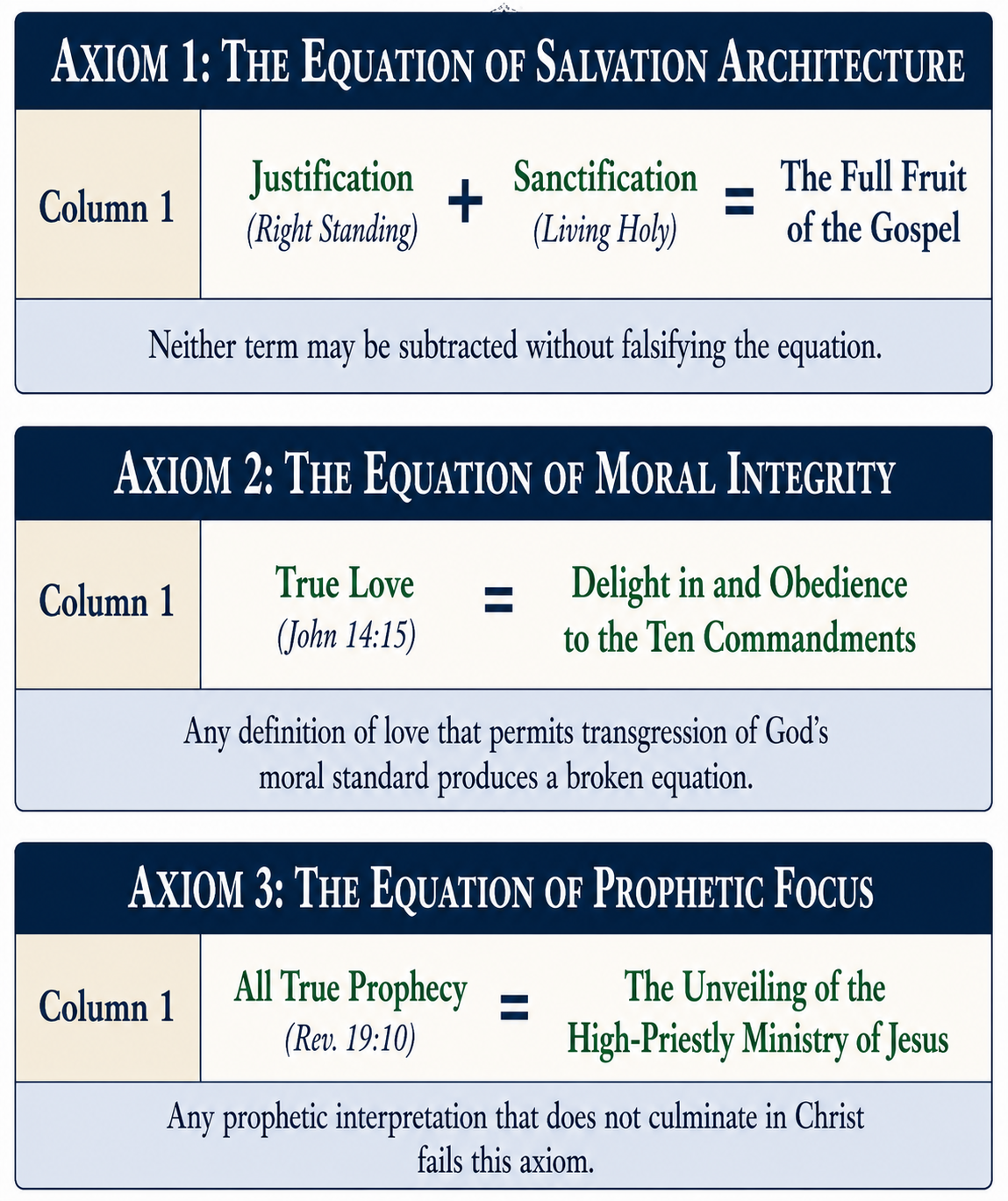
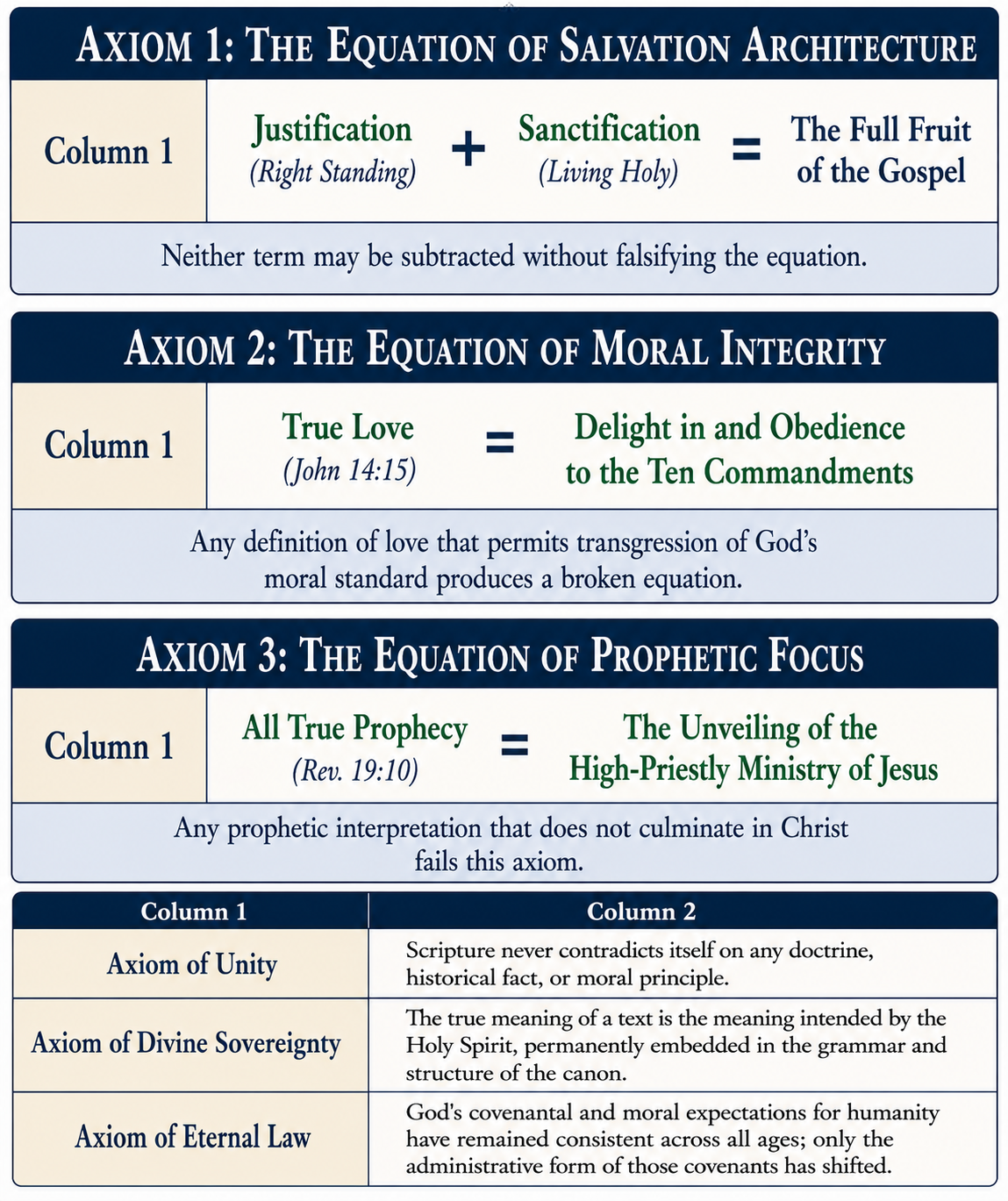
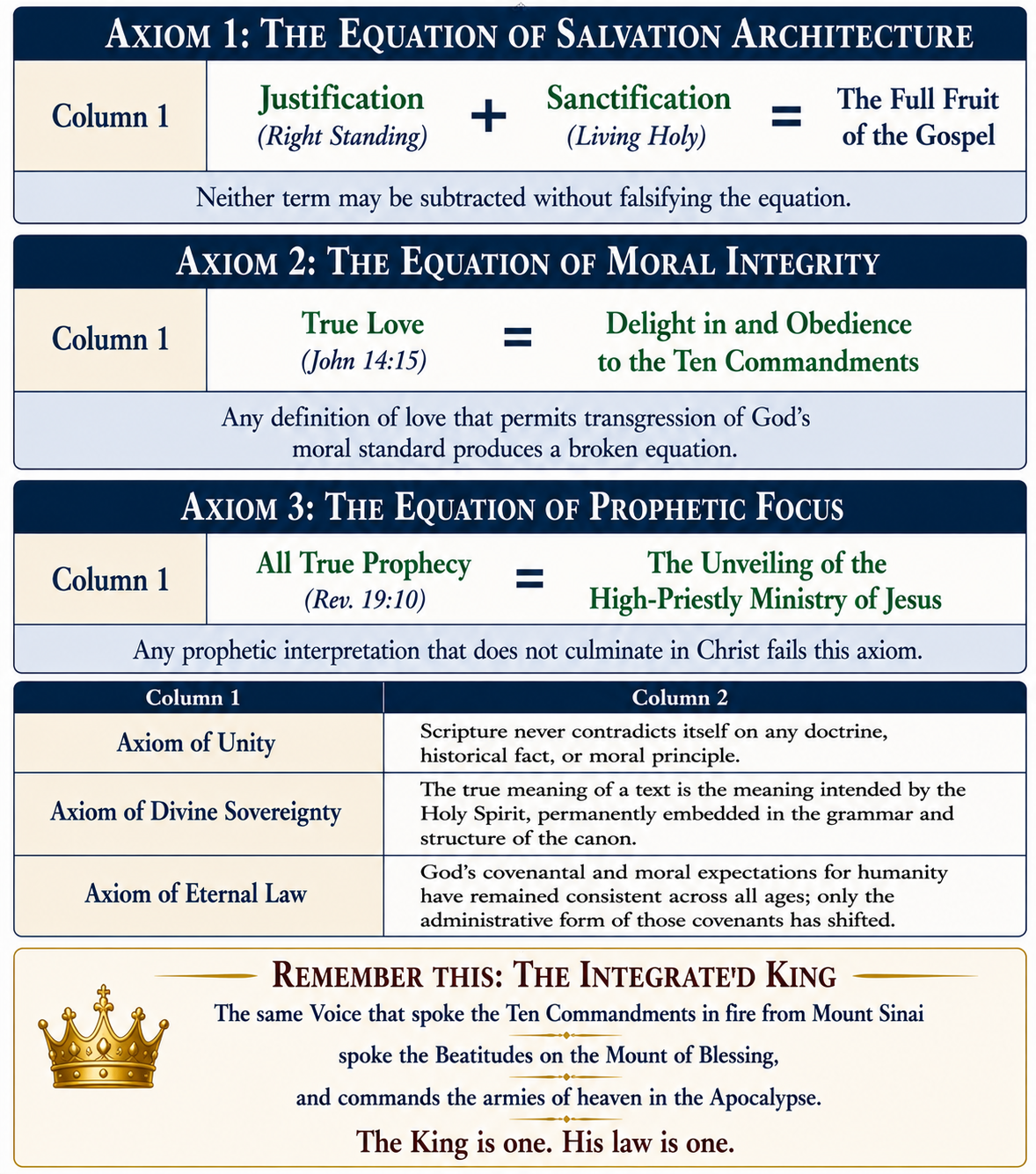
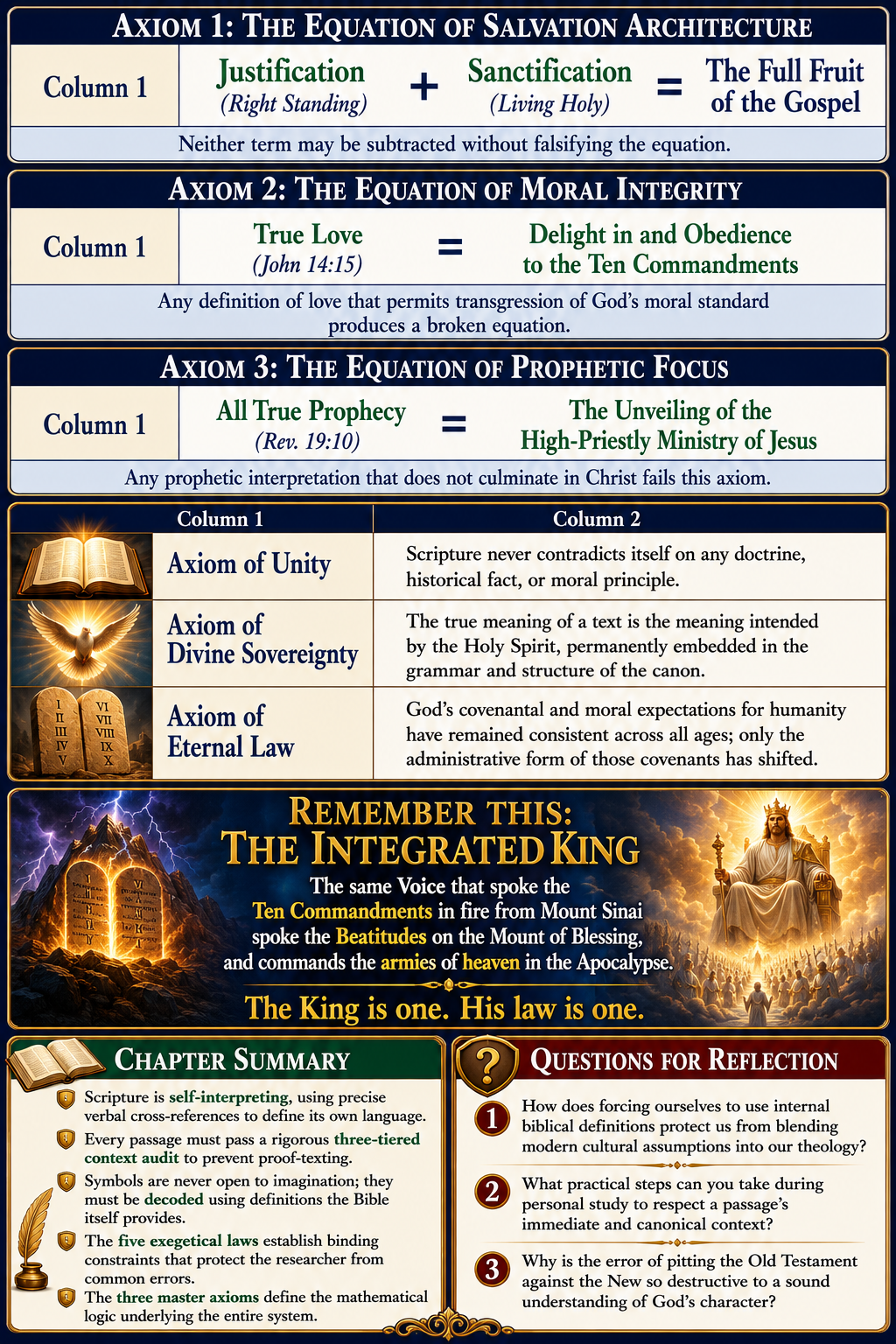
This framework treats biblical interpretation with the logical consistency of mathematical proof. Because God is the author of both truth and logic, the text behaves with perfect structural symmetry. Three theological equations express the core axioms:
The Three Master Axioms
In propositional form, the axioms may be stated as follows:
Chapter
Chapter 21: Common Errors in Interpretation
1. Eisegesis
The practice of reading external assumptions, philosophical ideas, or modern cultural expectations into the biblical text. Eisegesis substitutes the interpreter's presuppositions for the text's own internal claims and is the root of most doctrinal error.
2. Marcionite Bifurcation
The historical and recurring error of dividing the Bible into two opposing systems: an aggressive, legalistic Old Testament God versus a loving, law-free New Testament Christ. Nomomartyria identifies this as an architectural disaster. Jesus did not come to dilute or abolish the law; He came to display its beautiful character in human flesh and pay its legal penalty on behalf of sinners.
3. Hyper-Typologizing
Inventing arbitrary spiritual meanings for historical details without explicit textual justification or internal verbal links. The canonical decoding rule of Chapter 18 directly prevents this error: a symbol may only be assigned a meaning that the Bible itself supplies elsewhere.
4. Atomization
Treating individual verses as isolated soundbites, completely detached from their paragraph, their book's governing theme, and the broader canonical framework. The three-tiered contextual audit of Chapter 17 is the direct remedy.
PART V
Research Standards
Chapter
Chapter 22: Research Methodology
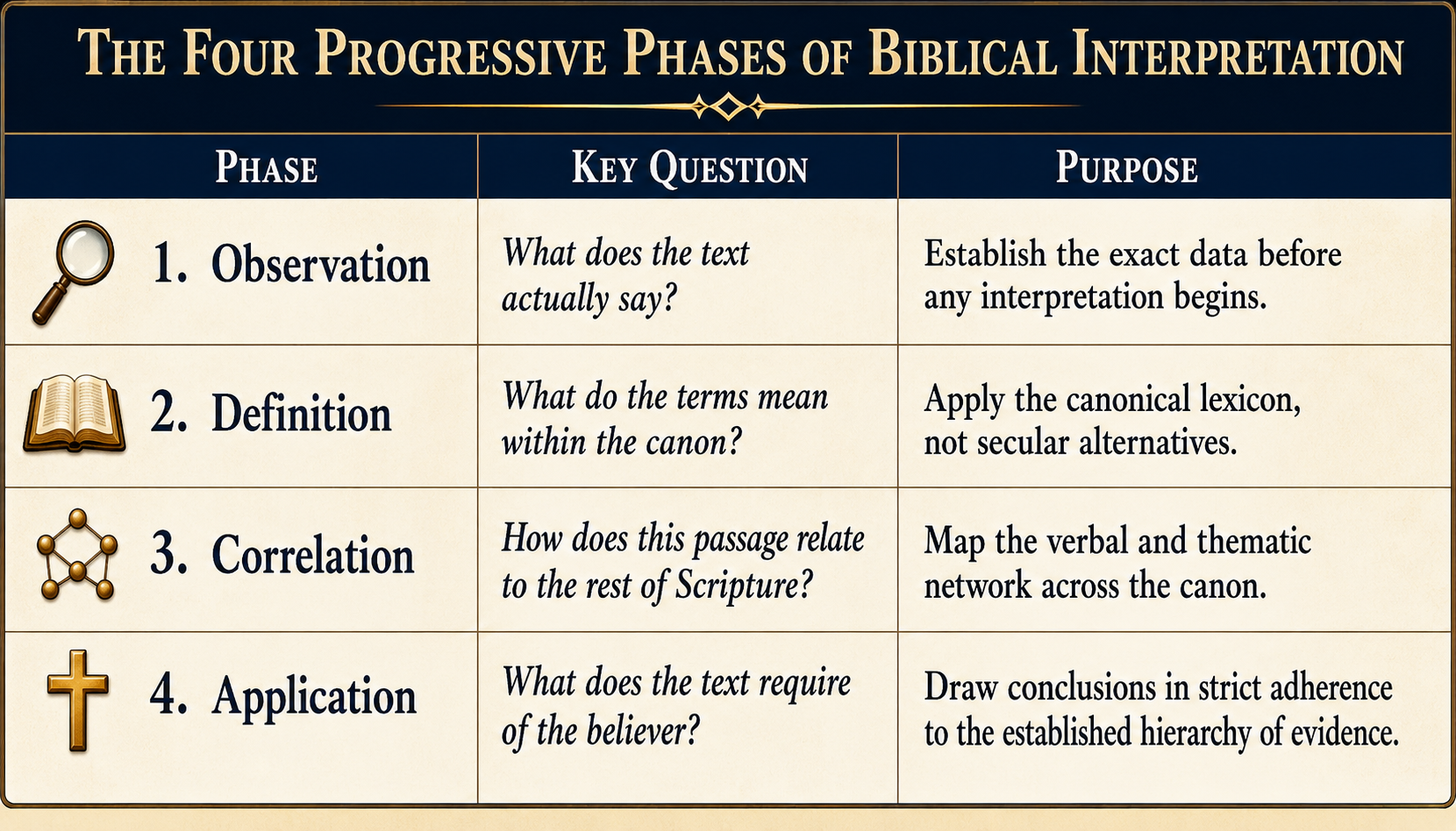
Exegesis within this framework demands absolute precision and academic accountability. It rejects impressionistic readings in which an interpreter relies on subjective feeling or modern cultural parallels. The biblical text is treated as an objective data field requiring systematic observation, clear definition, and disciplined analysis. The process follows four progressive phases:
Chapter
Chapter 23: Standards of Evidence
When evaluating an interpretation, all supporting evidence must be classified and weighted according to the following three-tiered standard:
- Primary Evidence (Internal Textual Data): Direct verbal links, chiasms, structural parallelisms, and explicit scriptural self-definitions. This class of evidence holds absolute interpretive authority.
- Secondary Evidence (Historical-Grammatical Data): Ancient Near Eastern cognate languages, contemporary historical documents, and archaeological artifacts. This data clarifies the cultural and linguistic context of the text, but cannot alter or override doctrine.
- Tertiary Evidence (Tradition and Commentary): The writings of Church Fathers, historical creeds, and modern academic commentaries. This data provides valuable historical perspective but carries no binding authority in the canonical courtroom.
Chapter
Chapter 24: Historical Research
Scripture is not a collection of abstract philosophical essays; it is an account of God's real actions in real human history. Historical research must therefore validate the literal reality of the biblical narrative. This framework rejects any historical-critical methodology that approaches the text with naturalistic biases—such as the assumption that miracles are impossible or that predictive prophecy must be written after the event (vaticinium ex eventu).
Historical and archaeological context is used to reconstruct the cultural setting, geography, and political climate of the original audience—helping the interpreter understand why a specific message was delivered in its particular form, without allowing that context to redefine the theological content of the message itself.
Chapter
Chapter 25: Language Studies
Sound interpretation requires disciplined study of the biblical languages: Biblical Hebrew, Imperial Aramaic, and Koine Greek. The researcher must consciously avoid two common semantic fallacies:
- The Root Fallacy: Assuming a word's meaning is always identical to its etymological root.
- Semantic Anachronism: Reading modern definitions back into ancient words.
Vocabulary must be analyzed through synchronic lexicography—determining how a word was used by contemporary authors at that specific moment in salvation history, with primary weight given always to its usage within the biblical canon itself.
Chapter
Chapter 26: Citation Standards and Verification Procedures
Theological research must explicitly cite its sources. All scriptural references should follow standard academic format (book, chapter, verse). Any use of ancient manuscripts or external historical documents must point directly to standard critical editions—the Nestle-Aland 28 for the Greek New Testament, and Biblia Hebraica Stuttgartensia for the Hebrew Bible.
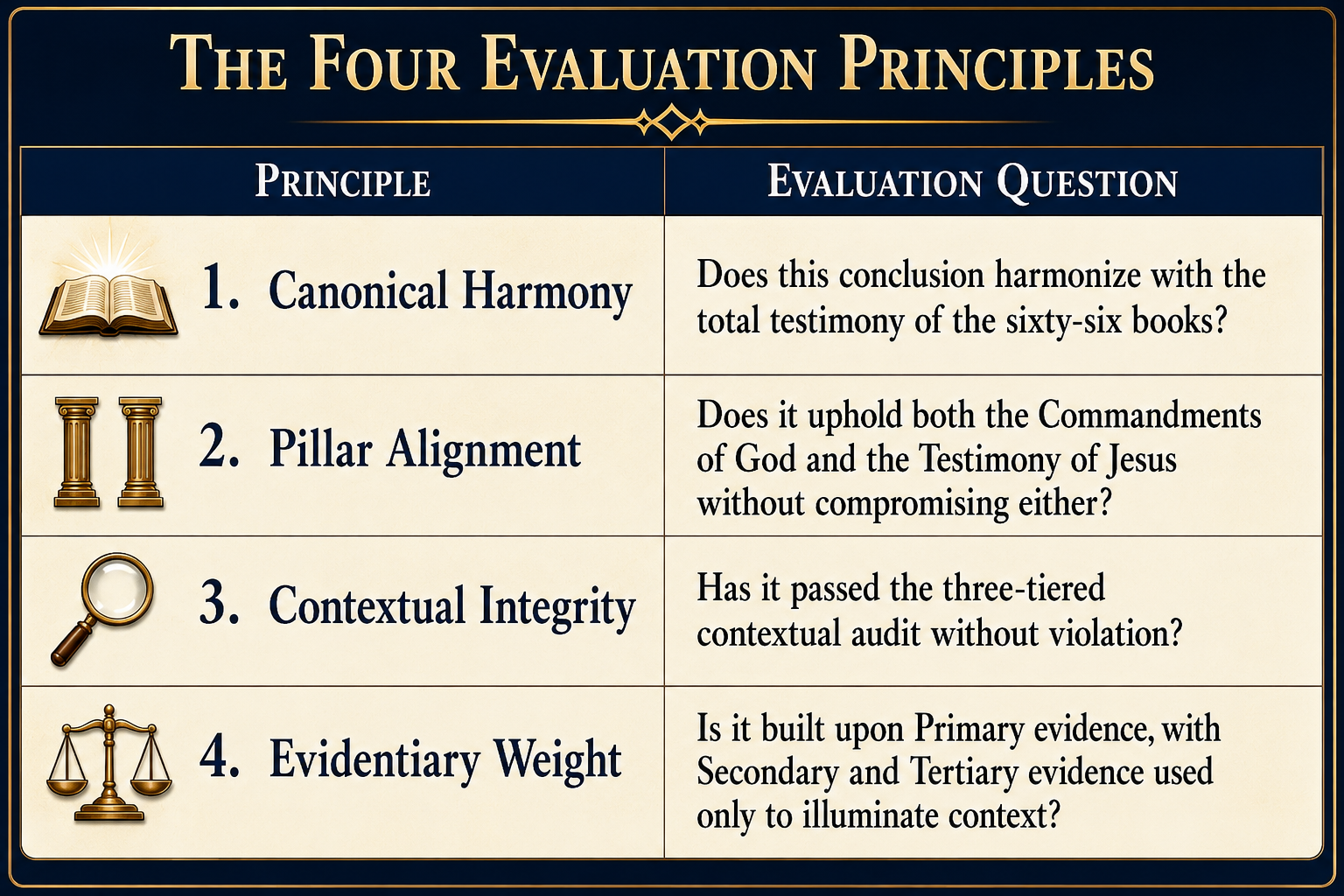
Before any exegetical conclusion is accepted into the canonical library, it must pass a fourfold verification:
PART VI
The Language of Scripture
Chapter
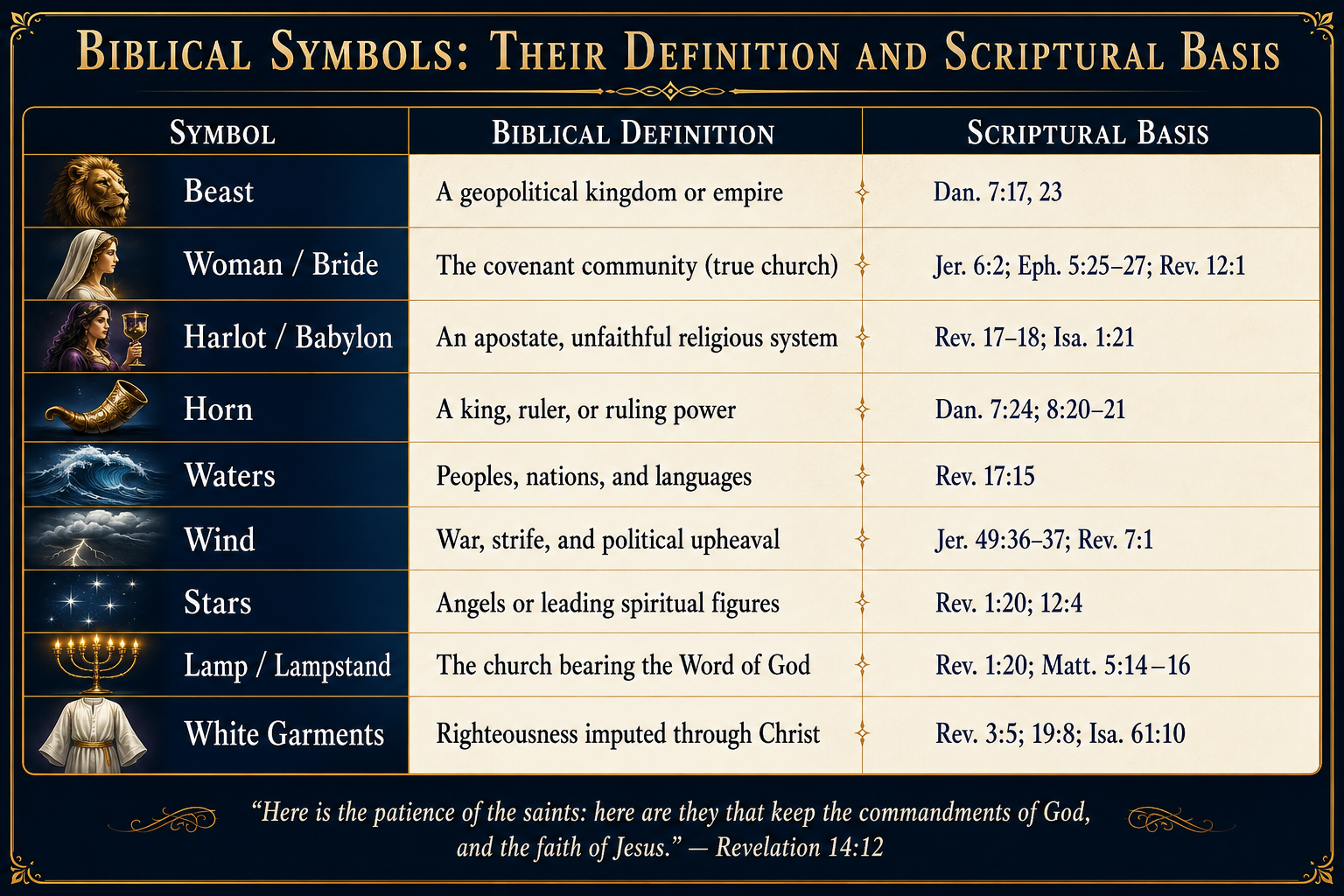
Chapter 27: Biblical Symbol Lexicon
To maintain stability across all interpretations, this framework employs an internal dictionary in which symbols are defined strictly by the biblical text itself. The following reference table supplies foundational entries:
Chapter
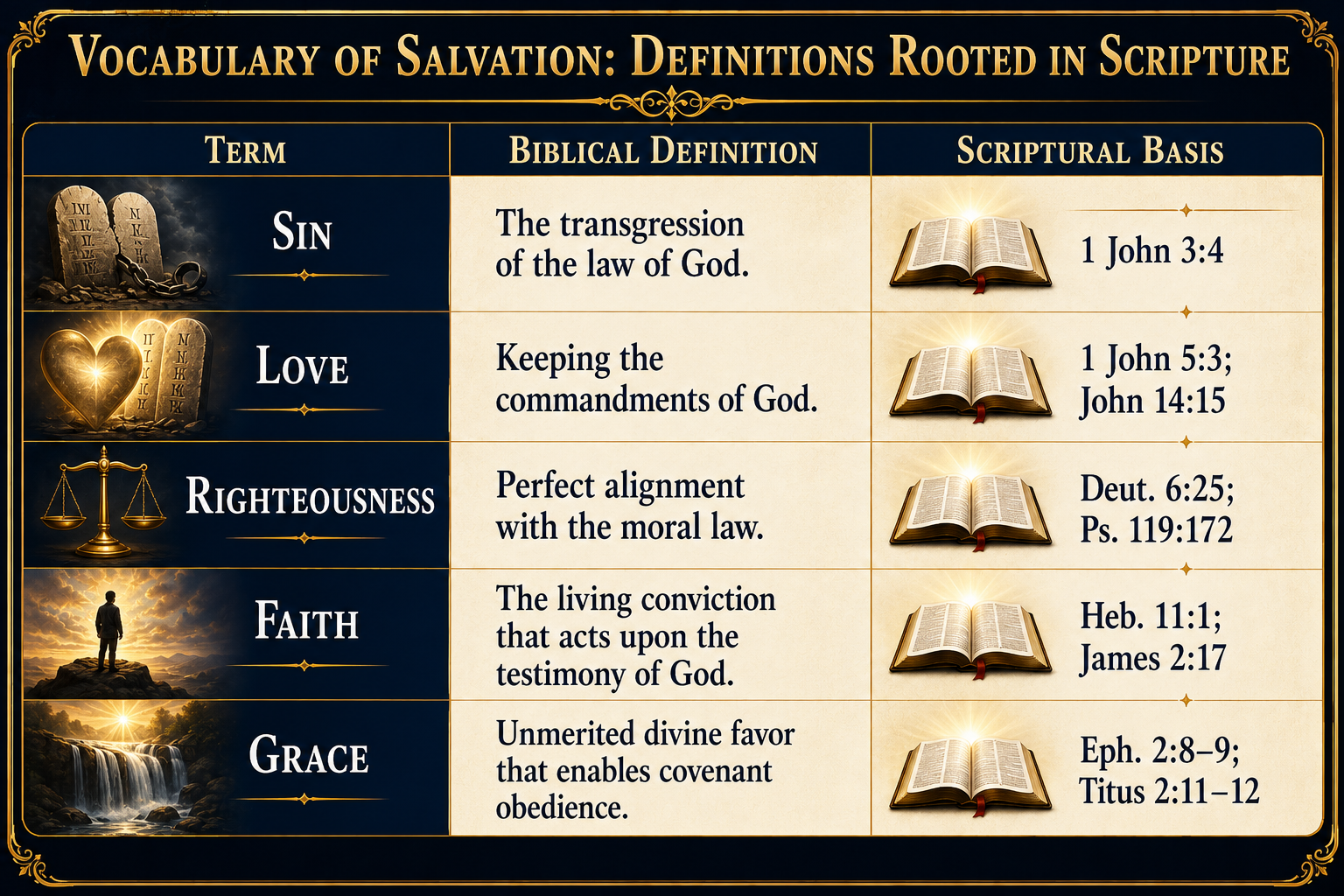
Chapter 28: Biblical Definitions
The Bible supplies clear internal definitions for its core theological terms. These definitions must govern interpretation; secular, philosophical, or modern psychological equivalents may not be substituted.
Chapter
Chapter 29: Prophetic, Sanctuary, Kingdom, and Covenant Language
Prophetic Vocabulary
Prophetic vocabulary alternates between two modes:
- Classical Prophecy (Isaiah, Jeremiah, Amos): Local cultural imagery; conditional outcomes tied to national repentance; warnings directed at literal Israel within specific historical horizons.
- Apocalyptic Prophecy (Daniel, Revelation): Highly symbolic, cosmic imagery; unconditional timelines; maps the continuous flow of human history from the prophet's day to the final establishment of the kingdom of God.
Sanctuary Language
The Mosaic tabernacle—together with its subsequent temple iterations—functions as a physical architectural model of the plan of salvation. Its geography and furnishings provide the interpretive vocabulary for New Testament soteriology:
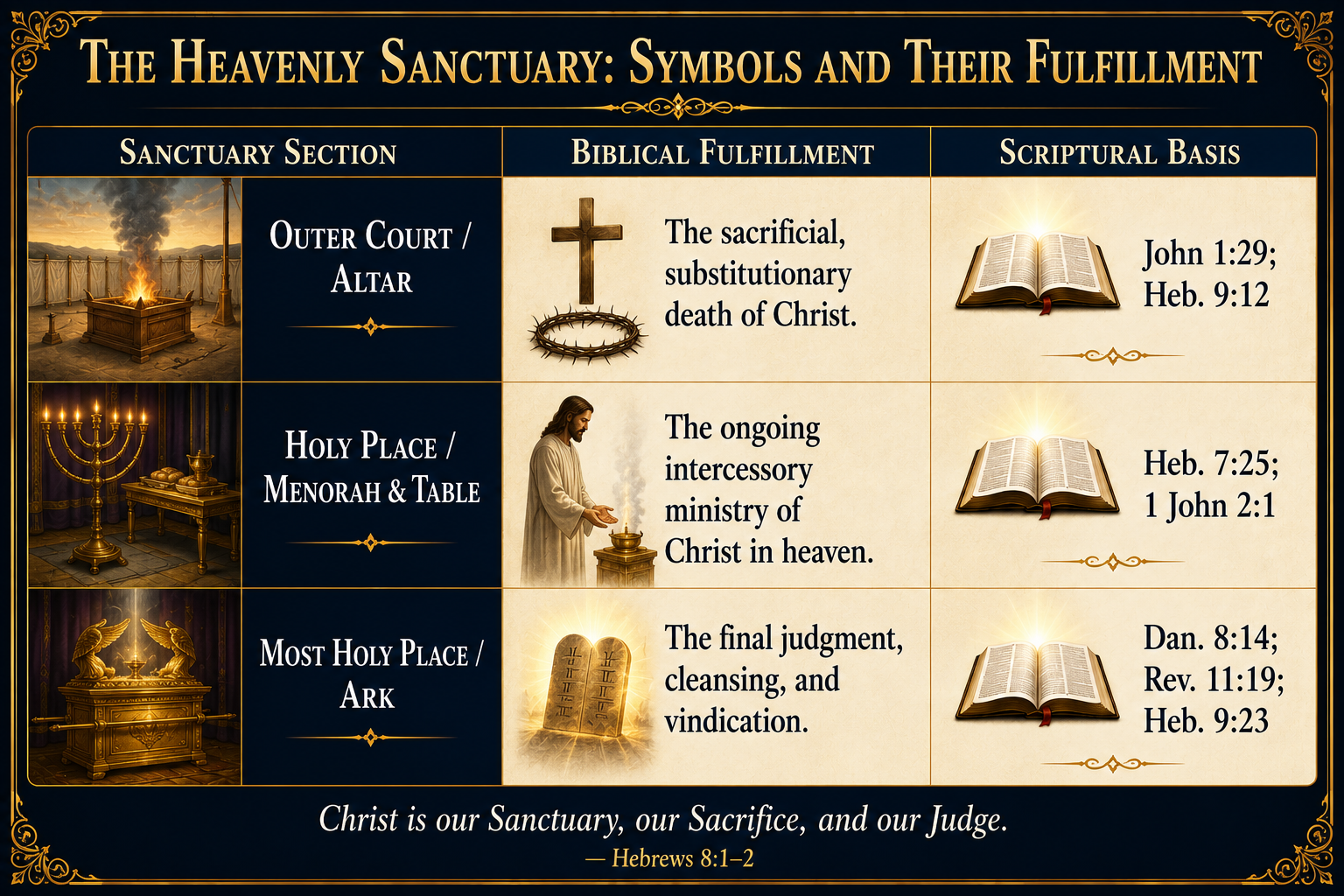
The Epistle to the Hebrews cannot be understood apart from this sanctuary framework; it is the definitive New Testament commentary on the typological meaning of the tabernacle system.
Kingdom Language
The concept of the kingdom of God operates on two distinct but sequential phases, which must never be conflated:
- Inaugurated Kingdom: Spiritual and internal; established within the hearts of believers at Christ's first advent ("the kingdom of God is within you"—Luke 17:21).
- Consummated Kingdom: Literal, spatial, and geopolitical; established visibly at Christ's second advent, when all earthly empires are broken and replaced by the everlasting dominion of God (Rev. 11:15; Dan. 2:44).
Covenant Language
A covenant is a binding legal agreement that structures God's relationship with humanity. Old and New Covenants are not independent, competing systems; they are two successive administrations of the same eternal plan of redemption. The Old Covenant failed because the people broke their promises through their own unaided human strength. The New Covenant succeeds because God writes His eternal law directly onto the heart of the believer through the Holy Spirit—the same law, now internalized (Jer. 31:31–34; Heb. 8:10).
Biblical Idioms
Scripture contains distinct Hebrew and Semitic idioms that require identification to prevent misinterpretation:
- Relative Negation: "Not X but Y" emphasizes the surpassing importance of Y, rather than the absolute prohibition of X. ("I desire mercy and not sacrifice"—Hos. 6:6 means: mercy matters incomparably more than empty ritual.)
- The Idiom of Permission: Hebrew writers describe God as actively performing an action when, in precise covenantal terms, He has permitted it by withdrawing His protective presence. (The hardening of Pharaoh's heart in Exodus 4–14 illustrates this pattern.)
PART VII
The Philosophy of Nomomartyria
Chapter
Chapter 30: Why Nomomartyria Exists
This framework exists to rescue biblical interpretation from the twin dangers of modern skepticism and subjective mysticism. It provides a robust, self-sustaining method that honors the divine origin of the canon by binding every interpretation to the unyielding standard of the Commandments of God and the Testimony of Jesus Christ. By anchoring the interpreter within this dual axis, the method protects the church from theological drift and ensures that teaching remains fastened to the absolute standard of biblical truth across every generation.
Chapter
Chapter 31: Distinctives
The defining characteristic of this framework is its refusal to compromise either pillar. It does not permit the Law to become legalism by separating it from the gospel of Jesus Christ. Nor does it permit the gospel to become lawless sentimentalism by severing it from the moral structure of God's eternal commandments. The system insists that every prophecy, symbol, and doctrine must be verified through this law-and-gospel axis simultaneously, creating an objective, internally consistent safeguard against interpretive error.
Chapter
Chapter 32: Comparison with Other Hermeneutical Systems
The following table locates the present framework within the broader landscape of Western hermeneutical traditions:
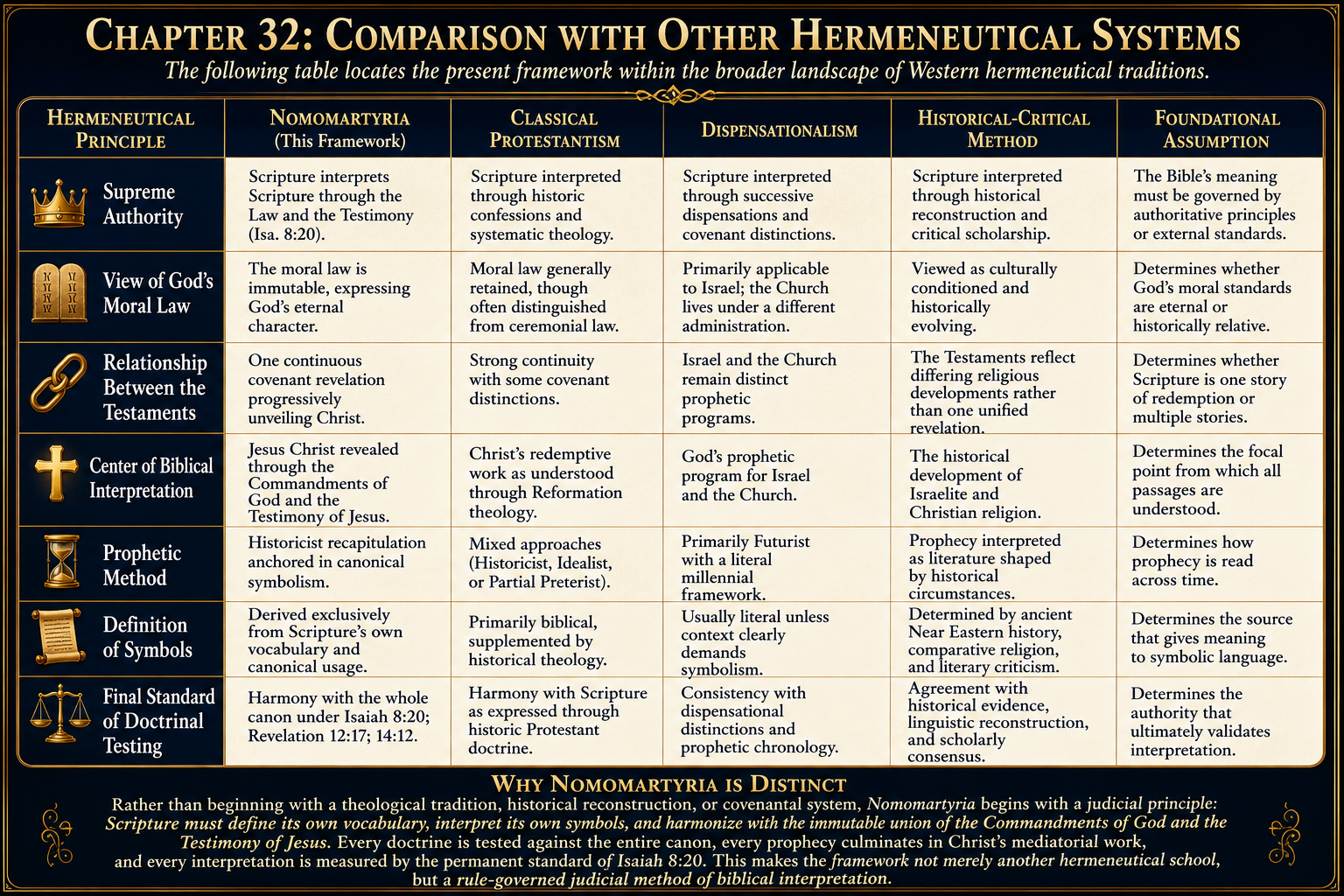
Where other systems tend to resolve the tension between Law and Gospel by suppressing one or the other, this framework maintains both in permanent, productive tension—reflecting the complete revelation of the biblical canon.
Chapter
Chapter 33: Frequently Asked Questions
Q1: Does this framework teach salvation by works, given its emphasis on the Commandments?
No. Salvation is entirely by grace through faith in the substitutionary life and death of Jesus Christ. However, genuine saving faith transforms the heart, producing a life of loving obedience to God's law. Obedience is not the root of salvation; it is the visible and necessary fruit. The equation of Axiom 2 (Chapter 20) makes this structure explicit.
Q2: Why does the framework give such weight to the books of Daniel and Revelation?
These books are not elevated above the rest of Scripture; rather, they are recognized as the canonical summaries that bring the major themes of the entire Bible into final focus. Revelation explicitly uses the language of the "Commandments of God" and the "Testimony of Jesus" to define the faithful community at the end of history, making its prophetic framework indispensable for constructing a complete hermeneutical standard.
Q3: How does this system handle cultural changes over time?
While cultural expressions, languages, and technologies evolve, the core moral law of God and the principles of His character are permanent. The framework consistently separates temporary cultural forms from the underlying, unchanging biblical truths to which those forms once pointed. Applications may vary across cultural contexts; the underlying moral standard does not.
APPENDICES
Appendix
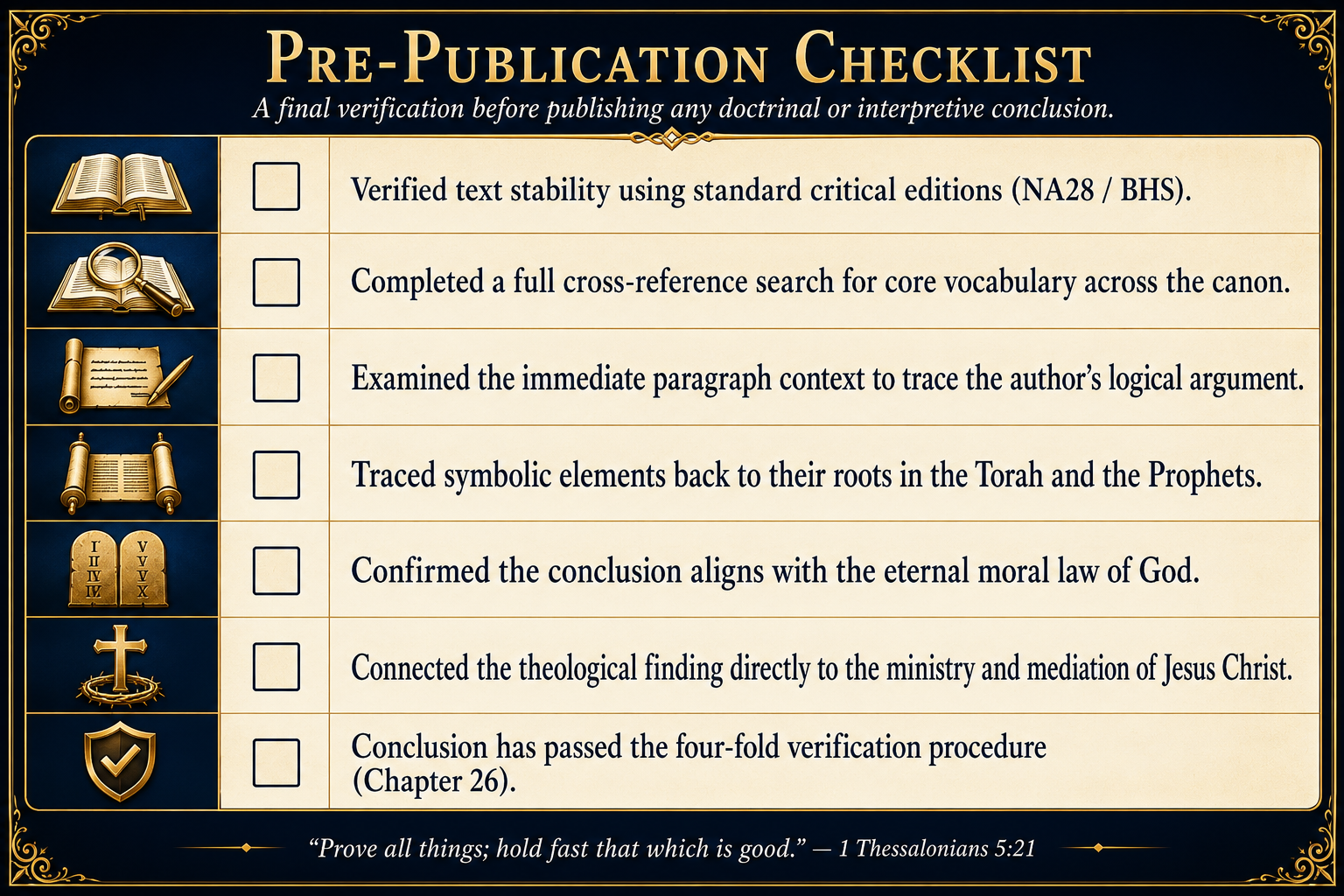
Appendix A: Research Checklist
Prior to presenting any exegetical conclusion, verify the following:
Appendix
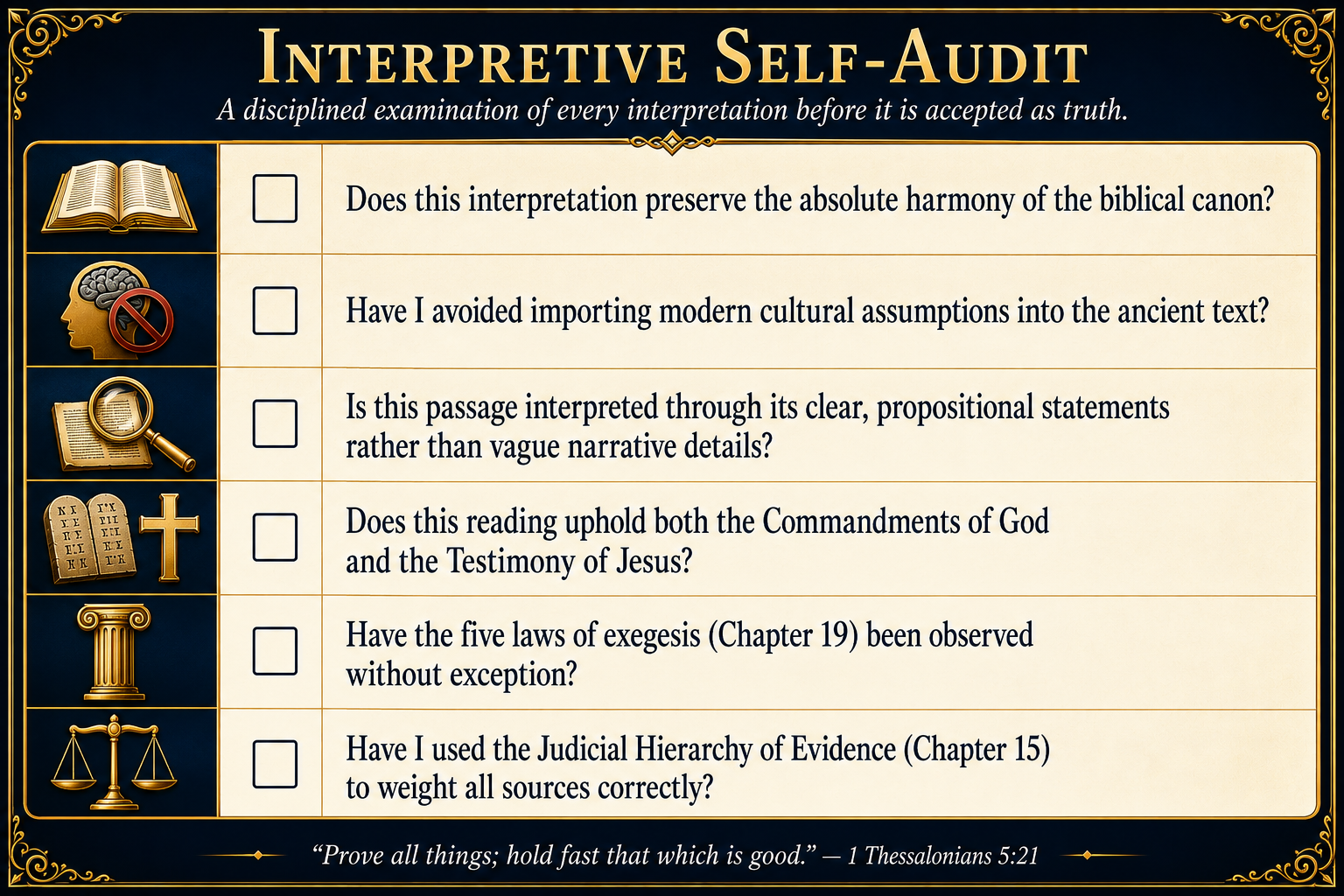
Appendix B: Interpretive Checklist
Appendix
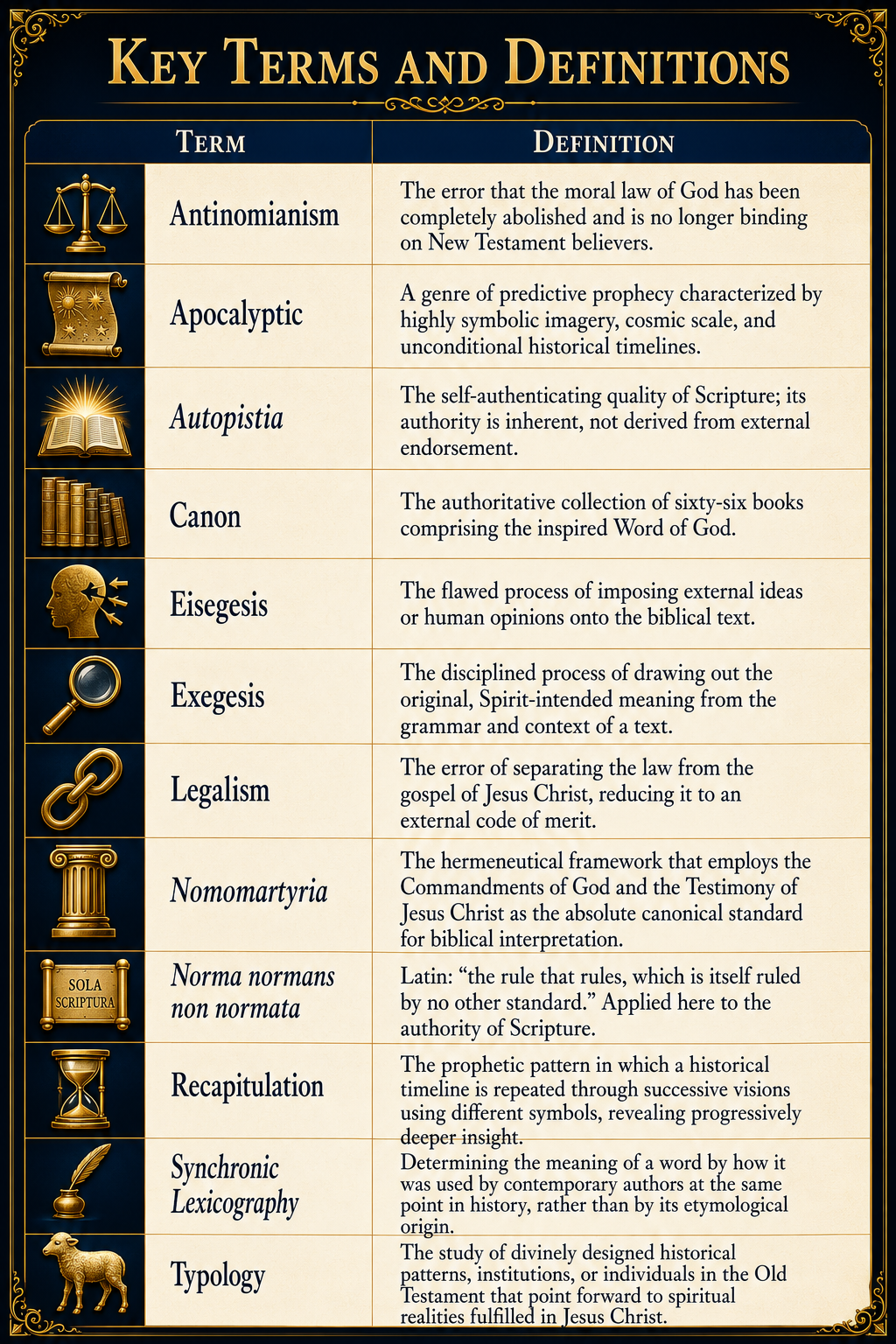
Appendix C: Glossary
Appendix
Appendix D: Bibliography
The following works represent the standard reference editions and foundational secondary sources for research conducted within this framework:
- Aland, Kurt, et al. Novum Testamentum Graece. 28th ed. Stuttgart: Deutsche Bibelgesellschaft, 2012.
- Davidson, Richard M. Typology in Scripture: A Study of Hermeneutical Typo-Structures. Berrien Springs: Andrews University Press, 1981.
- Elliger, K., and W. Rudolph. Biblia Hebraica Stuttgartensia. Stuttgart: Deutsche Bibelgesellschaft, 1997.
- Hasel, Gerhard. New Testament Theology: Basic Issues in the Current Debate. Grand Rapids: Eerdmans, 1978.
- Kaiser, Walter C. Toward an Exegetical Theology: Biblical Exegesis for Preaching and Teaching. Grand Rapids: Baker Academic, 1981.
Appendix
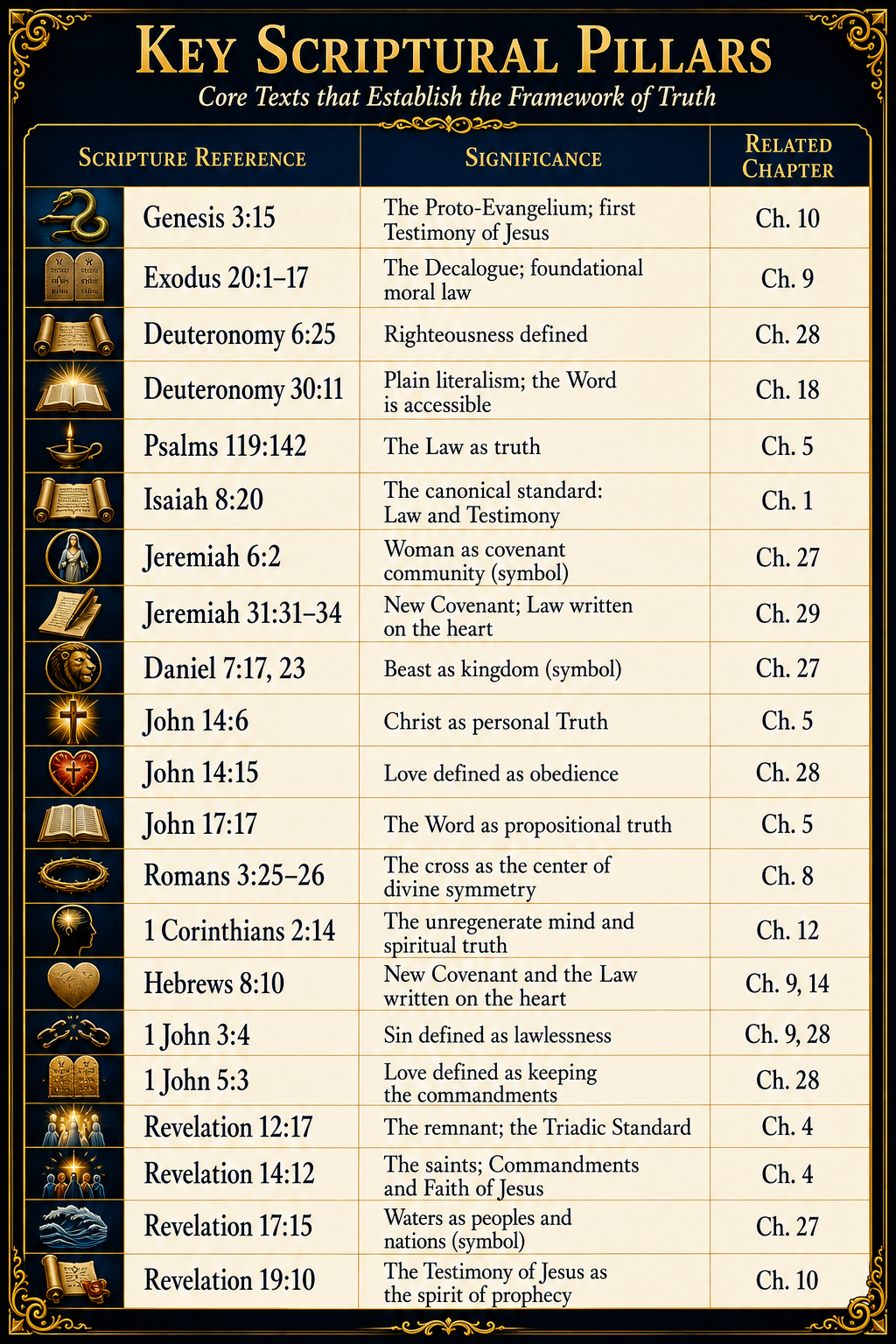
Appendix E: Scripture Index
NOMOMARTYRIA
A Handbook of Biblical Hermeneutics
"To the law and to the testimony:
if they speak not according to this word,
it is because there is no light in them."
— Isaiah 8:20
Council of Scripture Institute